
Zelda: Tears of the Kingdom’s Boldest Firsts That Changed Everything
Tears of the Kingdom eclipsed Breath of the Wild by adding sky islands, the Depths, and revolutionary Ultrahand/Fuse building.
I still remember the day Breath of the Wild launched. March 3, 2017 was a turning point for the Zelda series – and for me as a player. The sheer sense of freedom, the way the game trusted me to figure things out without holding my hand… it was intoxicating. Fast forward to 2023, and I honestly thought there was no way a sequel could top that. But Tears of the Kingdom didn't just meet expectations – it shattered them by tossing in so many firsts that I’m still, in 2026, awestruck by its audacity. Let me walk you through the features that made this game a true paradigm shift.
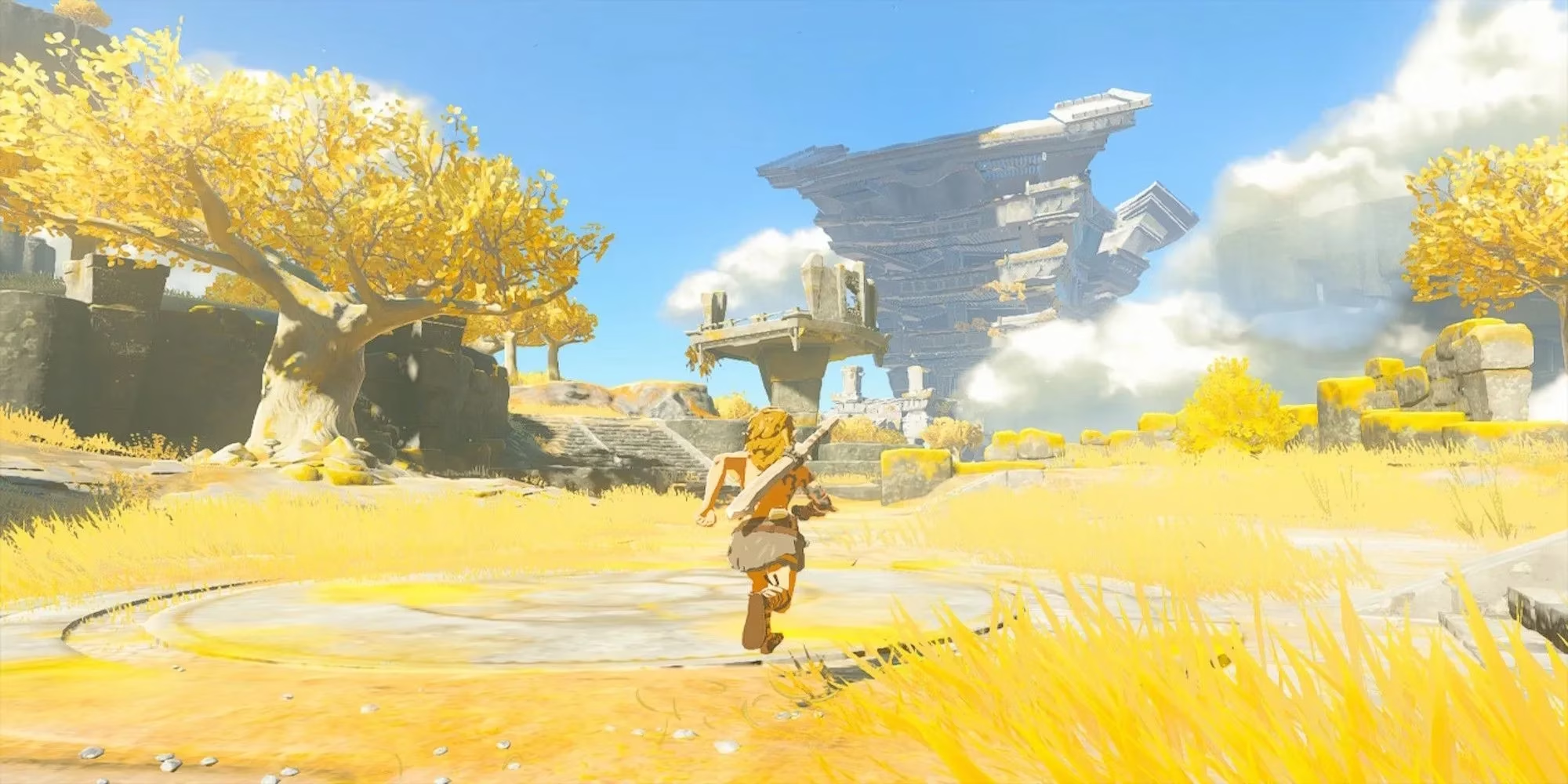
I gotta talk about the world first. Yes, the surface map is a remixed version of Hyrule from Breath of the Wild. Some people grumbled about that, but then you look up – and you look down. Sky islands dot the heavens like shattered memories of an ancient age, and below the crust lies the Depths, a pitch-black underworld unlike anything in previous games. I’ve played every Zelda title, and none of them had an underground region this massive and oppressive. The Depths feel endless, full of gloom, strange flora, and the terrifying Gloom Hands. The sky islands, meanwhile, reminded me of Skyward Sword’s floating realms, but on a scale that makes that game feel like a demo. This dual-layered expansion redefined what a reused map could mean – it’s not just a rehash, it’s a whole new dimension of exploration. I can’t imagine the next Zelda abandoning such verticality now.
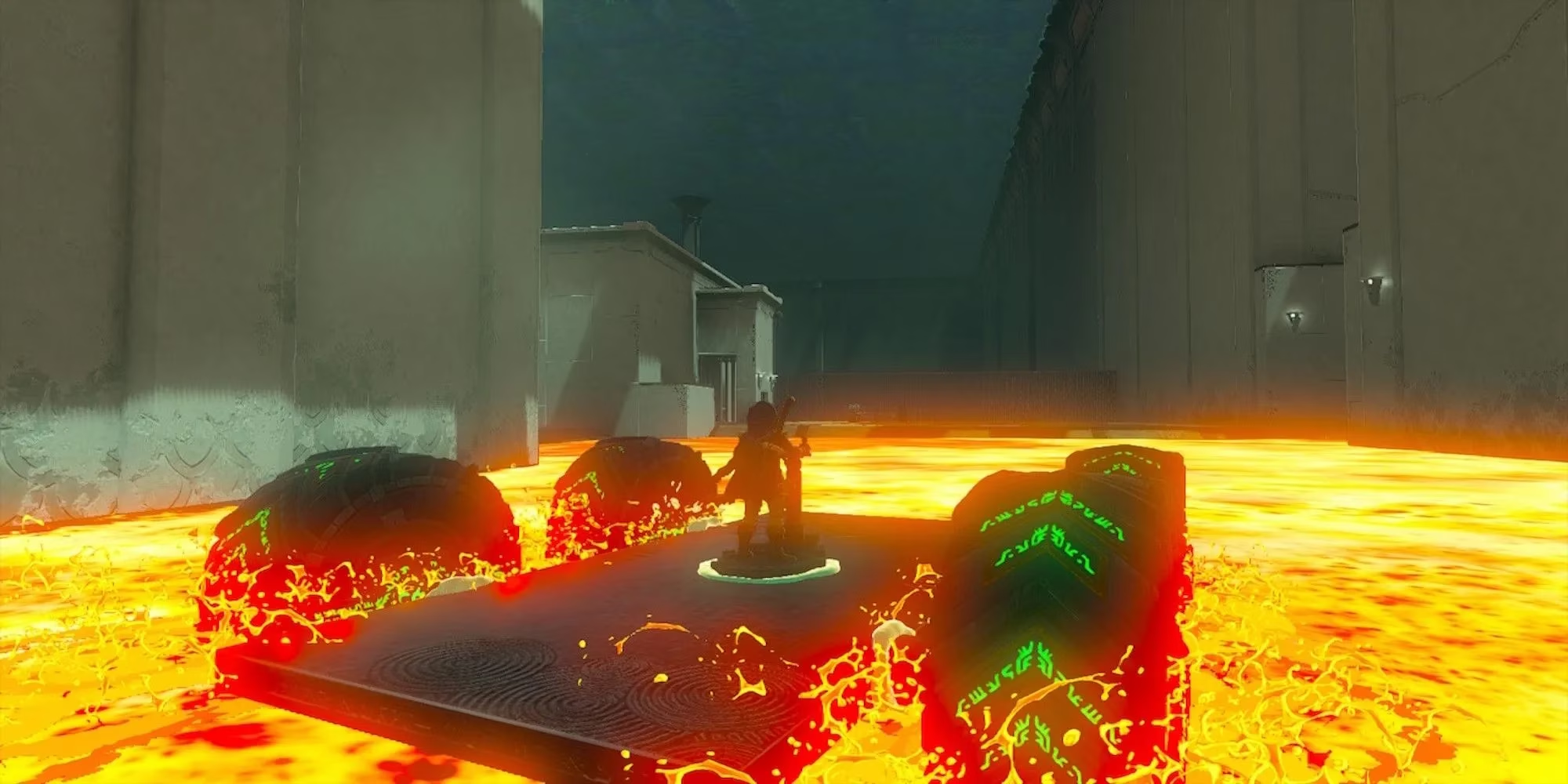
But the real mind-blower came when I first fused a rock to a stick. Tears of the Kingdom basically handed us creativity itself. With Ultrahand and Fuse, suddenly Hyrule was my personal sandbox. I’ve built bridges out of wagon wheels, helicopters, flame-throwing robots, and even a boat that skims over lava. The building mechanics felt like Nintendo took a page from Minecraft and then sprinkled a healthy dose of Zelda magic on top. And the community? Even now in 2026, I still see folks sharing wild contraptions online – the sheer inventiveness hasn’t dulled one bit. The weapon durability issue from Breath of the Wild didn’t vanish, but fusing a boulder to a sword to create a makeshift club made that frustration almost… fun. It turned inventory management into a game of mad science.
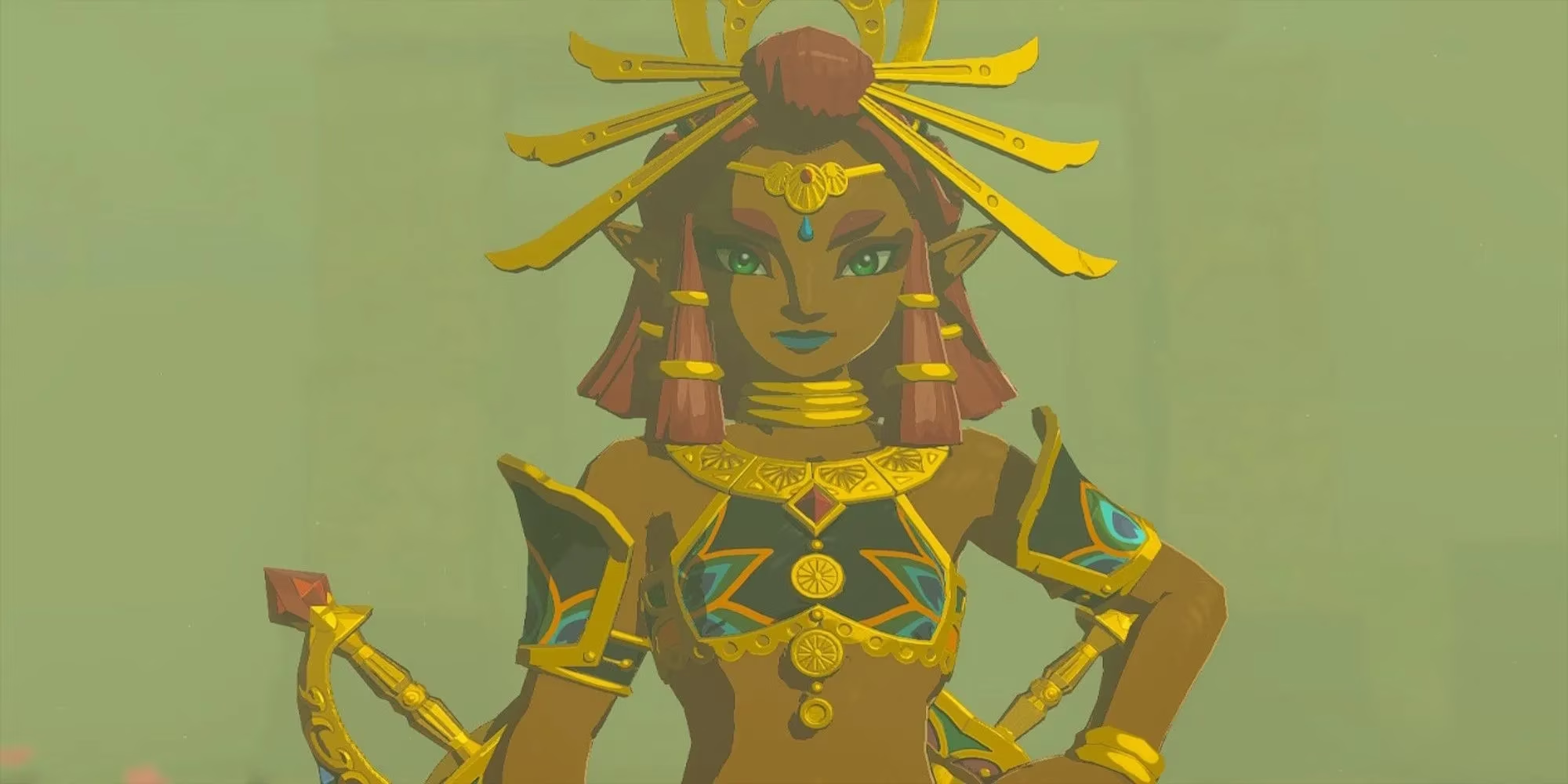
Combat saw a huge change too – the sages. In Breath of the Wild, the four Champions gave you passive abilities, but in Tears of the Kingdom, their descendants (and even a certain ancient figure) show up as actual AI companions. I rolled into battle with five spectral allies surrounding me once, and it felt like leading my own little Fellowship. Sure, their AI can be a bit derpy, but having Riju zap a group of enemies with lightning while Tulin snipes from above and Yunobo smashes through armor created moments of genuine teamwork. No Zelda game ever let me command a party like this before. I keep wondering if the future games will double down on this – imagine a fully customizable squad system.
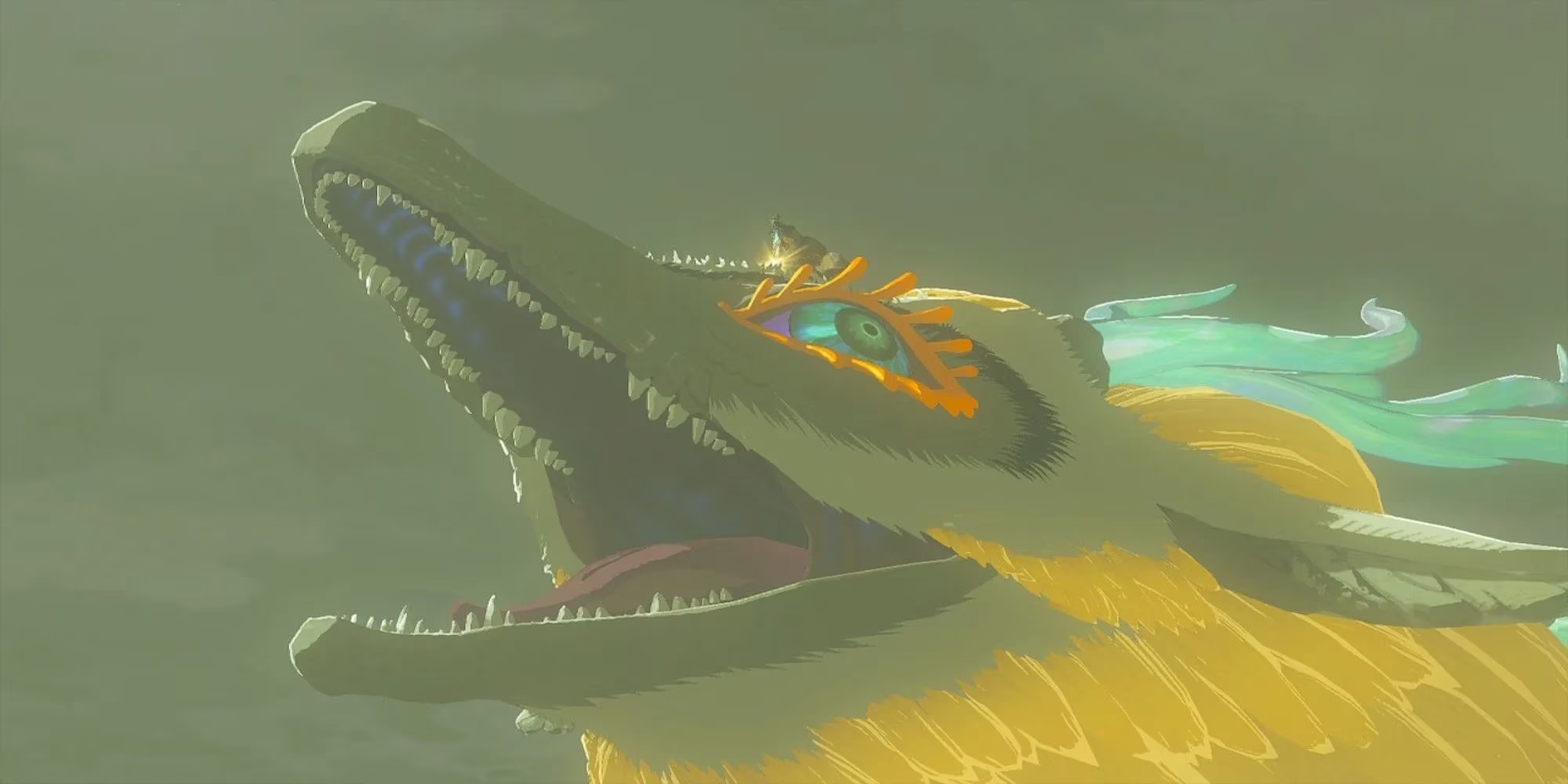
I still get chills thinking about Zelda’s transformation. Look, I wanted her to be playable – we all did. But instead, she swallowed a Secret Stone and turned into the Light Dragon, wandering the skies for tens of thousands of years with the Master Sword literally embedded in her forehead. Waiting. That’s the most tragic, emotionally devastating thing any Zelda character has ever endured. When I finally figured out the truth and pulled the sword from her draconic form, the sob that escaped me wasn’t dignified at all. This narrative choice was so bold, so dark, that I’m not sure the series can ever go back to a simple “save the princess” story. It set a new benchmark for storytelling weight.
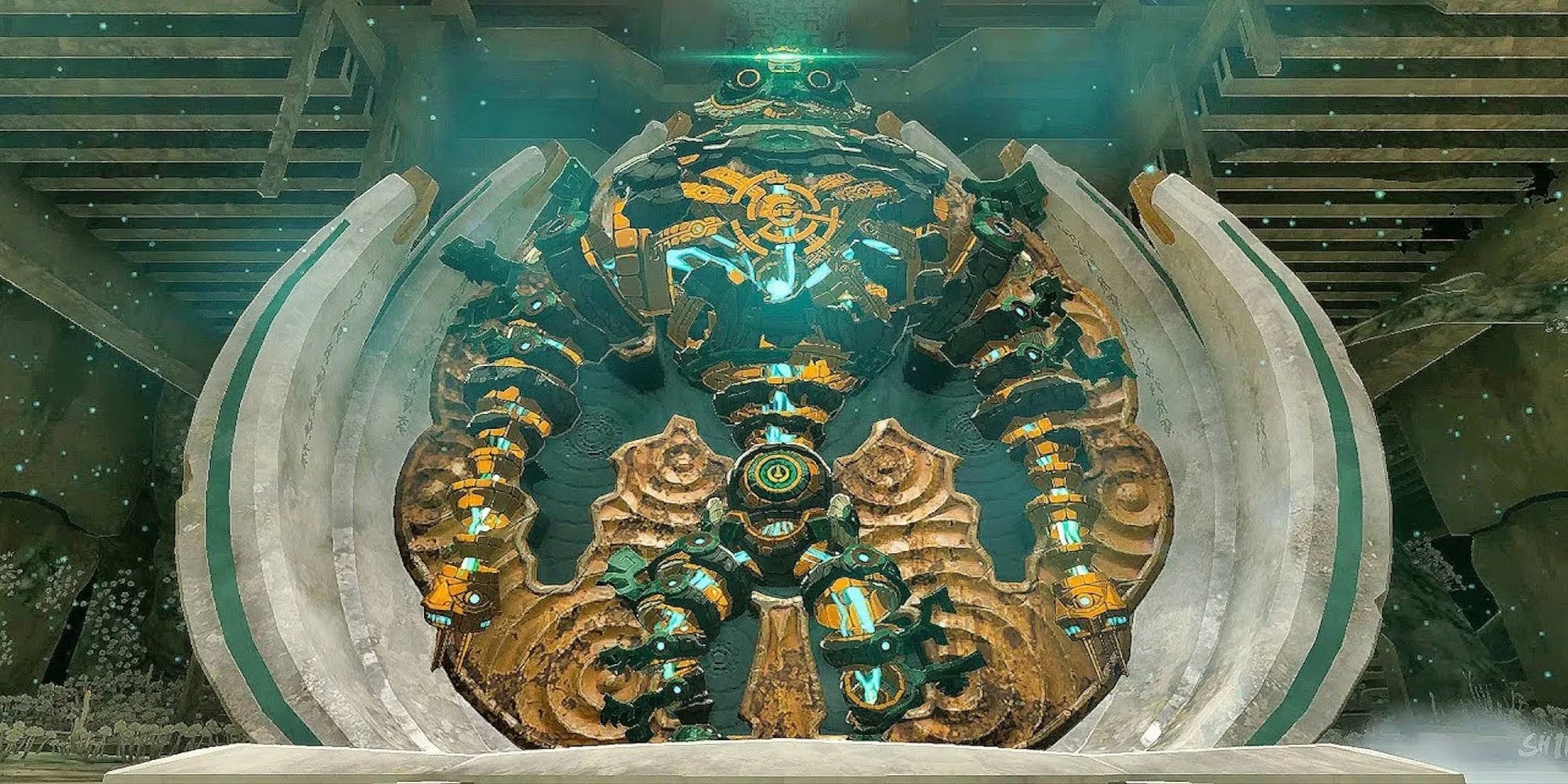
Also, can we talk about the mech? Mineru’s construct is the most steampunk thing I’ve ever seen in a Zelda game. The moment I climbed into that stone robot and started lumbering around, I felt like I was playing a different genre entirely. It’s not a huge Gundam, but the sheer novelty of piloting a rideable piece of armor was unforgettable. The chassis let me smash through enemy camps that would have give me trouble on foot. I really hope the next entry doesn’t forget this kind of vehicular fun – maybe we’ll see Link pilot a proper airship built from scratch.
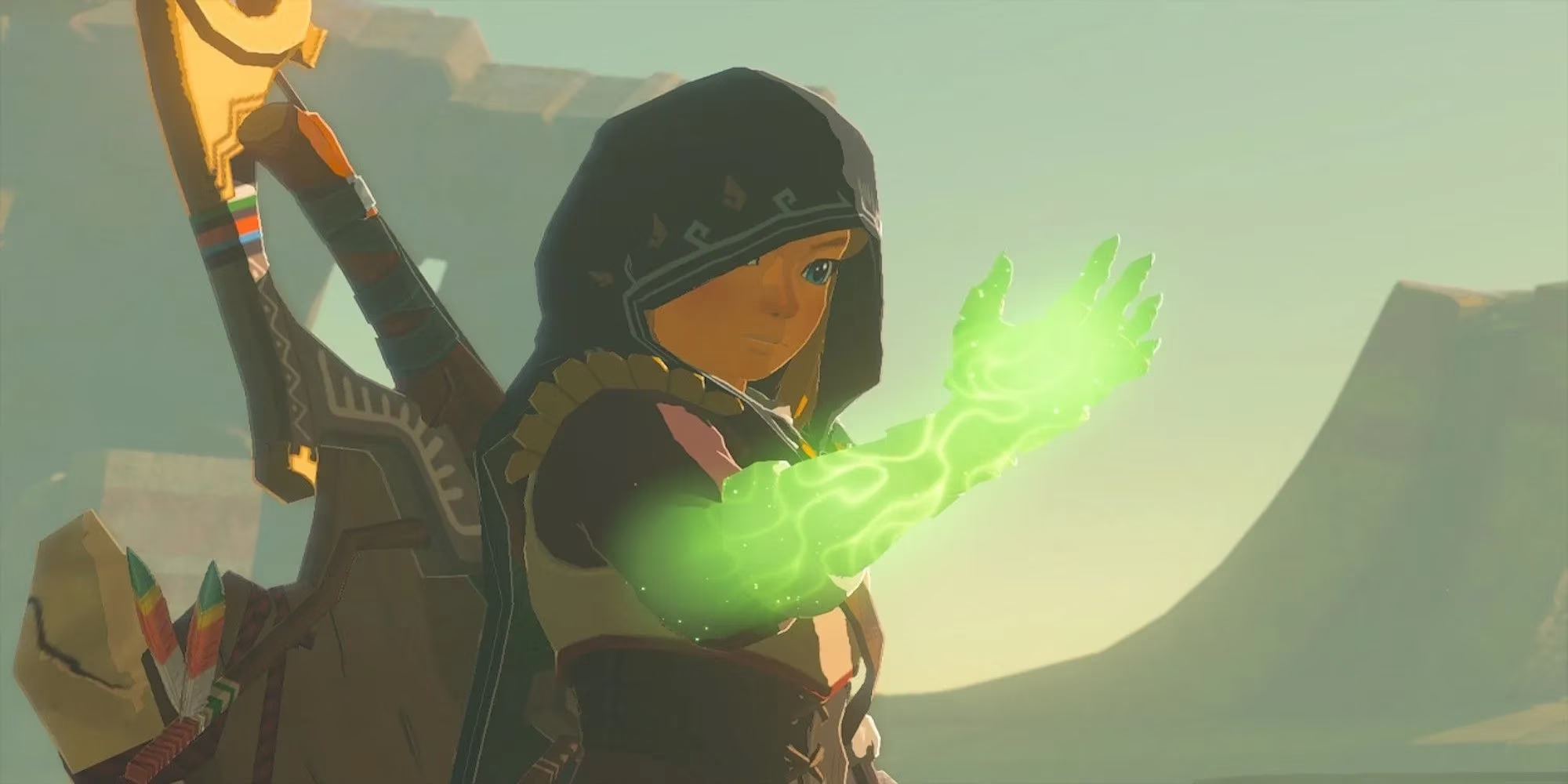
Finally, the two new arm abilities – Recall and Ascend – rewired my brain. Recall literally lets you rewind an object’s movement through time. A boulder fell off a cliff? Send it back up and ride it. Ascend makes you swim through solid ceilings, popping up on the surface like a startled prairie dog. I can’t count the number of times these powers solved puzzles in ways that made me feel like a genius. They’re so simple yet so versatile. Other open-world games really need to steal these ideas, and I’ll be disappointed if the next Zelda doesn’t keep them or evolve them further.
Tears of the Kingdom, released in May 2023, still dominates my thoughts three years later. Looking back, it feels like the end of an era for the Switch – and maybe the starting point for the next generation’s Zelda. Nintendo has proven they can take wild swings and land them beautifully. The question isn’t whether they can go back on these features; it’s whether they’d even dare to. And honestly, I hope they don’t.