
Zelda Echoes of Wisdom: Artistic Tributes and My Excitement for 2026
Explore the captivating artistic legacy of The Legend of Zelda: Echoes of Wisdom, where fan tributes like TobyFoxArt's stunning Tears of the Kingdom-style reimagining showcase the game's enduring creative impact.
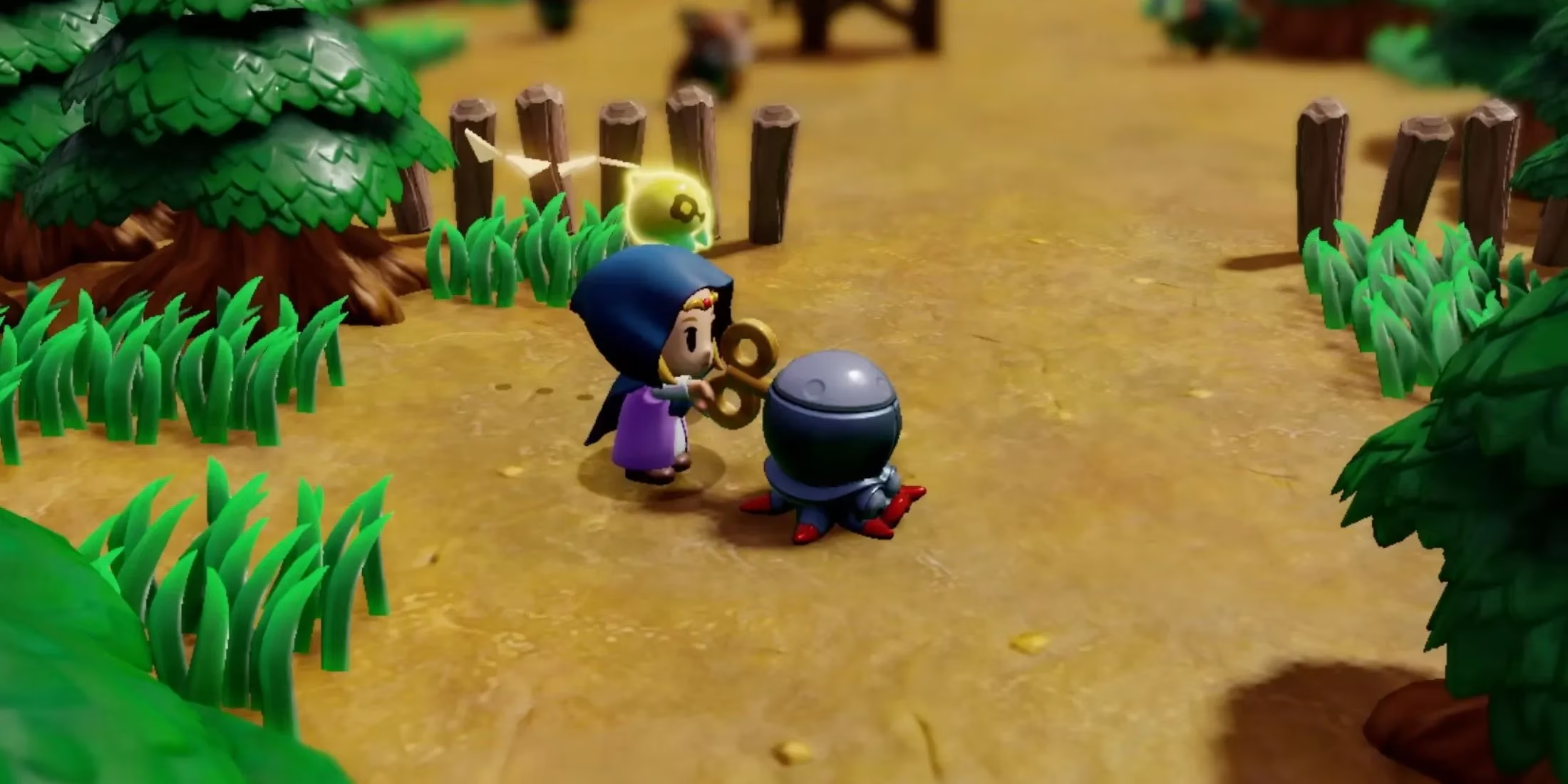
As a lifelong fan of The Legend of Zelda series, I can't help but feel a surge of excitement looking back at the journey that led us here to 2026. Remember when The Legend of Zelda: Echoes of Wisdom was first announced? It feels like just yesterday we were all buzzing about the June Nintendo Direct reveal. That initial trailer was a revelation—not just for its promise of finally letting us play as Princess Zelda in a mainline adventure, but for its charming, painterly art style that felt like a direct successor to the beloved Link's Awakening remake. Fast forward to today, and the game's creative legacy continues to inspire artists and players alike, long after its initial release.
The Artistic Crossover That Captured Our Hearts
One of the most memorable tributes to Echoes of Wisdom came from an artist named TobyFoxArt. I vividly recall scrolling through social media and being absolutely floored by their work. They took a specific, poignant scene from the debut trailer—the moment where Zelda, accompanied by her fairy companion Tri, witnesses a tense conversation between members of the green and blue Zora tribes—and reimagined it completely. But here's the brilliant twist: they didn't recreate it in Echoes' own style. Instead, they masterfully translated it into the hyper-detailed, open-world aesthetic of Tears of the Kingdom.
Let me paint you a picture of what they created:
-
The Scene: The core narrative moment was preserved—Zora leaders deep in discussion, possibly about a peace treaty, with Zelda observing from a respectful distance.
-
The Artistic Alchemy: The entire visual language changed. The soft, toy-like textures of Echoes were replaced with the realistic lighting, intricate material details, and vast environmental depth characteristic of Tears of the Kingdom.
-
The Devilish Details: This wasn't just a simple background swap. TobyFoxArt went the extra mile, adding functional UI elements directly from Breath of the Wild and Tears of the Kingdom. Imagine seeing:
-
The weapon, object, and ability selectors in the top-left corner.
-
The Sheikah Slate-style map interface in the bottom-right.
-
Little environmental Easter eggs, like a hidden Korok and a delicate Silent Princess flower blooming nearby, beautifully blending the iconography of multiple Zelda eras.
The artist shared that this labor of love took nearly 24 hours of dedicated work. The fan response was immense! People, myself included, praised the incredible attention to detail and the seamless fusion of two distinct Zelda visual identities. It was a testament to how versatile and inspiring the world of Hyrule can be.
Why Echoes of Wisdom Was a Game-Changer
Looking back from 2026, it's clear why Echoes of Wisdom sparked such a vibrant creative community. It wasn't just another sequel; it was a paradigm shift for the series.
| Feature | Why It Mattered |
|---|---|
| Playable Zelda | After decades of rescuing the princess, we finally stepped into her shoes for a full, canonical adventure. It was a monumental moment for storytelling and player agency. |
| The Tri Rod & Echoes | The core gameplay mechanic—creating "echoes" of objects and enemies to solve puzzles—was ingeniously creative. It encouraged non-violent solutions and outside-the-box thinking in a way no Zelda game had before. |
| Top-Down Perspective | The return to the classic overhead view was a delightful nod to the series' roots, proving that modern game design and nostalgic presentation could coexist perfectly. |
| Artistic Identity | Its unique, diorama-like aesthetic, while different from the open-world titles, established a strong and memorable visual legacy that clearly inspired cross-over art like TobyFoxArt's. |
The Lasting Creative Ripple Effect
That fan art project was more than just a cool image; it was a symbol of the series' enduring power. Echoes of Wisdom demonstrated a new kind of creative potential for Hyrule, and in turn, the fans reflected that potential right back at it through their own creations. It sparked a wave of "what if" scenarios:
-
What if the Dark World from A Link to the Past was rendered in the Breath of the Wild engine?
-
What would classic 2D dungeons look like with the physics system from Tears of the Kingdom?
-
How would characters from The Wind Waker be interpreted in a more realistic style?
The community began mashing up timelines, art styles, and gameplay mechanics, all fueled by the fresh excitement Echoes generated. It reminded us that the heart of Zelda isn't just in one specific visual style or gameplay format—it's in the sense of adventure, puzzle-solving, and exploration, which can be expressed in countless beautiful ways.
My Personal Hopes Looking Forward
Sitting here in 2026, with Echoes of Wisdom as a cherished part of gaming history, my mind races with possibilities for the future. The success of letting Zelda take the lead opens so many doors. Could we see a game featuring the Hero of Time's childhood? Or an adventure focused on building a new settlement in a reclaimed Hyrule? The mechanic of creating "echoes" feels like it's only scratched the surface of puzzle design potential.
Most of all, I hope the spirit of creative cross-pollination that TobyFoxArt's art so perfectly represents continues. The Legend of Zelda's universe is vast and rich, and seeing fans reinterpret its moments through different lenses only deepens our collective love for it. That single piece of art, blending the new with the old, the stylistic with the realistic, captures exactly why this series has endured for so long: its ability to inspire wonder, not just in the games themselves, but in the hearts and imaginations of everyone who plays them. The echo of that inspiration, it seems, never truly fades.