
Unveiling the Deep Lore of Hyrule: Hidden Secrets in The Legend of Zelda: Tears of the Kingdom
Uncover the profound secrets and deep lore of The Legend of Zelda: Tears of the Kingdom, transforming Hyrule into a living tapestry of history and mystery.
As The Legend of Zelda: Tears of the Kingdom approaches its third anniversary in 2027, the vast landscapes of Hyrule, the Depths, and the Sky Islands continue to yield profound secrets, even for the most dedicated explorers. Beyond the surface-level adventure, the game is woven with intricate narrative threads and world-building details that offer a richer understanding of its place in the Zelda mythos. From the enigmatic origins of its landmarks to the fate of its divine beings, these deep lore revelations transform the kingdom from a mere playground into a living, breathing tapestry of history and mystery.
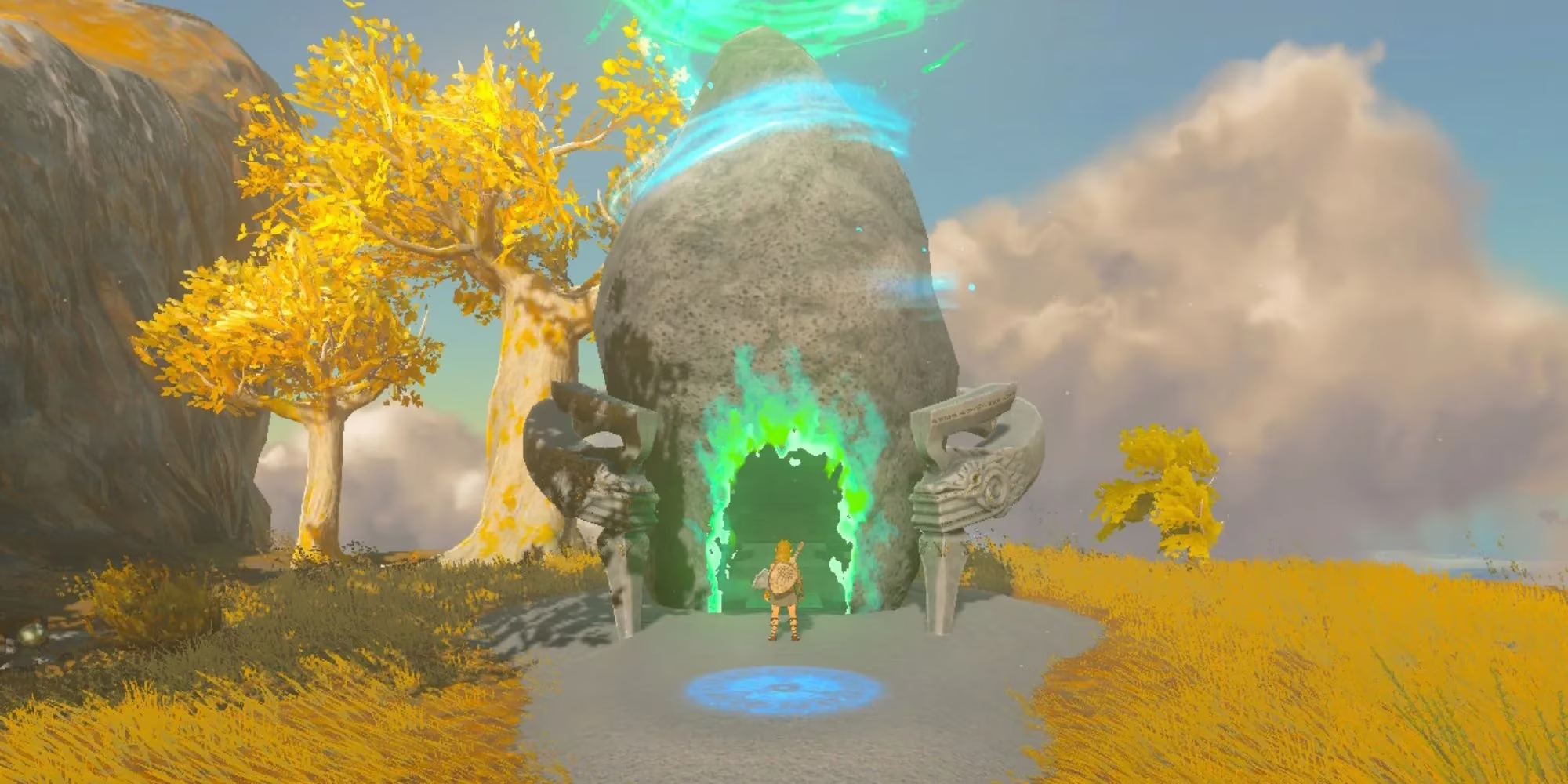
The Ancient Purpose of the Shrines of Light
While reminiscent of the Ancient Shrines from Breath of the Wild, the Shrines of Light are not Sheikah constructs. According to director Hidemaro Fujibayashi, these structures are far older, predating even King Rauru's reign. They re-emerged from dormancy alongside the Sky Islands as a direct response to Ganondorf's reawakening, acting like ancient, dormant sentinels suddenly powering up to aid a new hero. Their purpose is singular: to empower those who would stand against the encroaching darkness. This revelation frames them not as random puzzle boxes, but as a pre-ordained defense system, a celestial armory strategically deployed across time and space.
Ganondorf: A Familiar Deception in a New Timeline
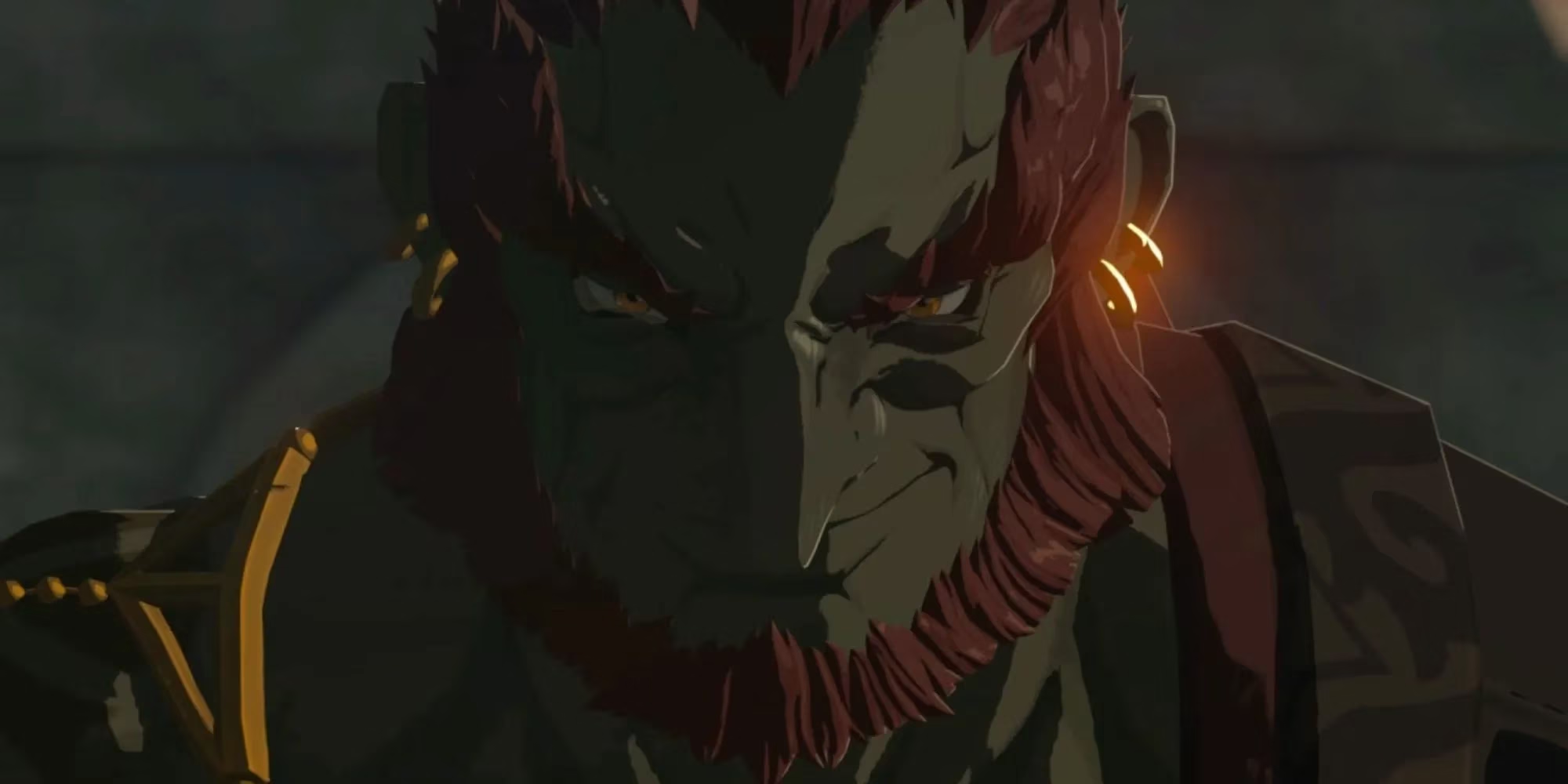
The Ganondorf of this era exists in a timeline separate from his previous incarnations, yet his methods are hauntingly familiar. The Dragon Tear memory depicting his feigned surrender to King Rauru is a masterstroke of narrative mirroring. It directly parallels the cunning strategy employed by the Ganondorf in Ocarina of Time, where he gained the trust of the royal family only to betray them. This cyclical nature of his malice, like a poisonous vine that always finds the same cracks in the castle wall, suggests that while the face of Hyrule changes, the threat of deception remains a constant, chilling throughline.
The Depths: Hyrule's Shadowy Afterlife
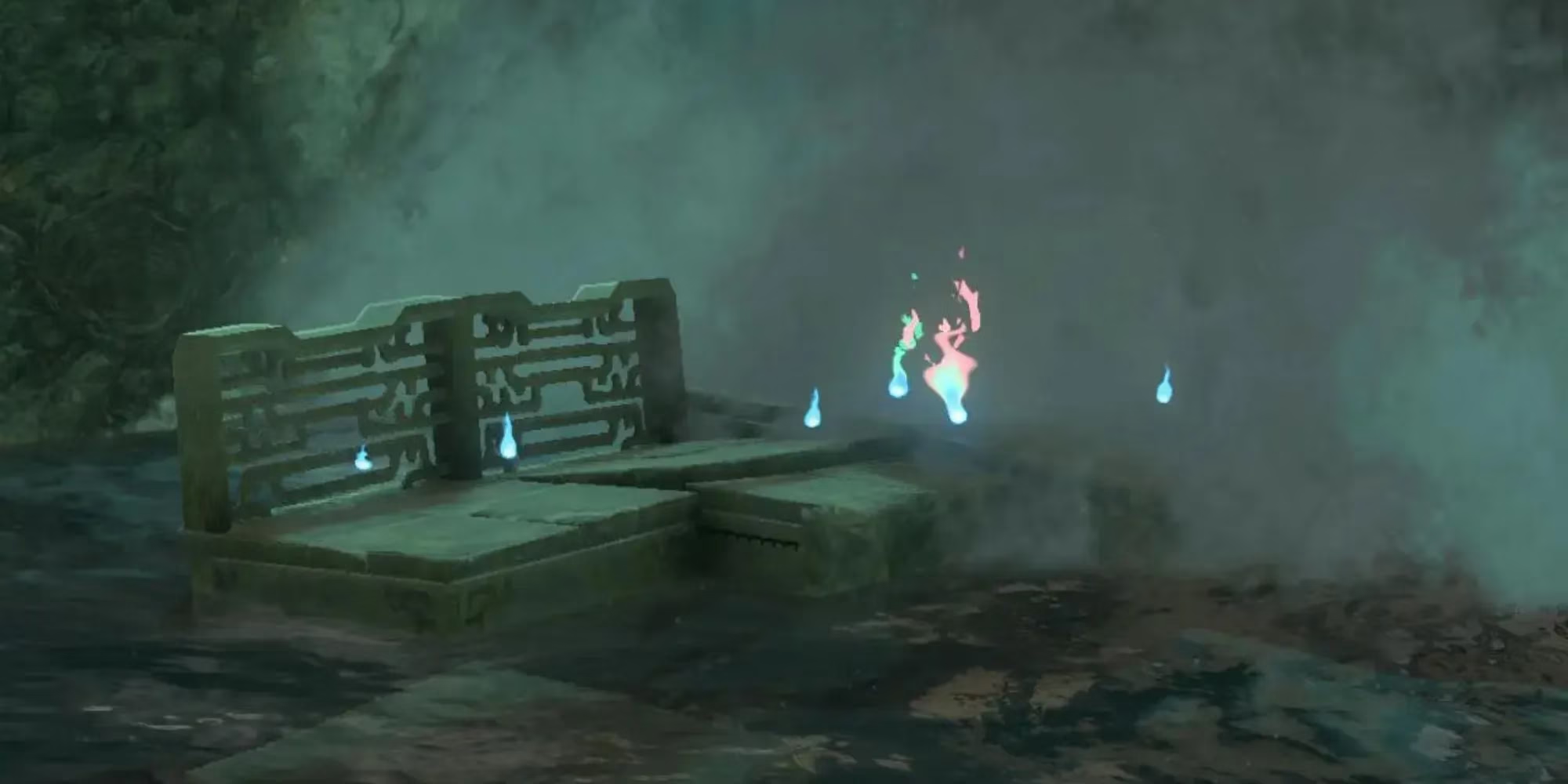
The Depths, a vast subterranean mirror of the surface world, have sparked theories of being a "Dark World." However, compelling in-game evidence points to a more somber truth. The proliferation of Poes—lost souls—and spectral apparitions strongly implies this realm is Hyrule's literal afterlife. Diaries from the Yiga Clan speak of Bargainer statues stealing souls, and defeated boss monsters reappear here, their essences trapped. The Depths function less like a parallel dimension and more like a silent, phosphorescent archive of the kingdom's past conflicts and departed lives, a geological memory of every tragedy.
King Rauru: More Than a Name
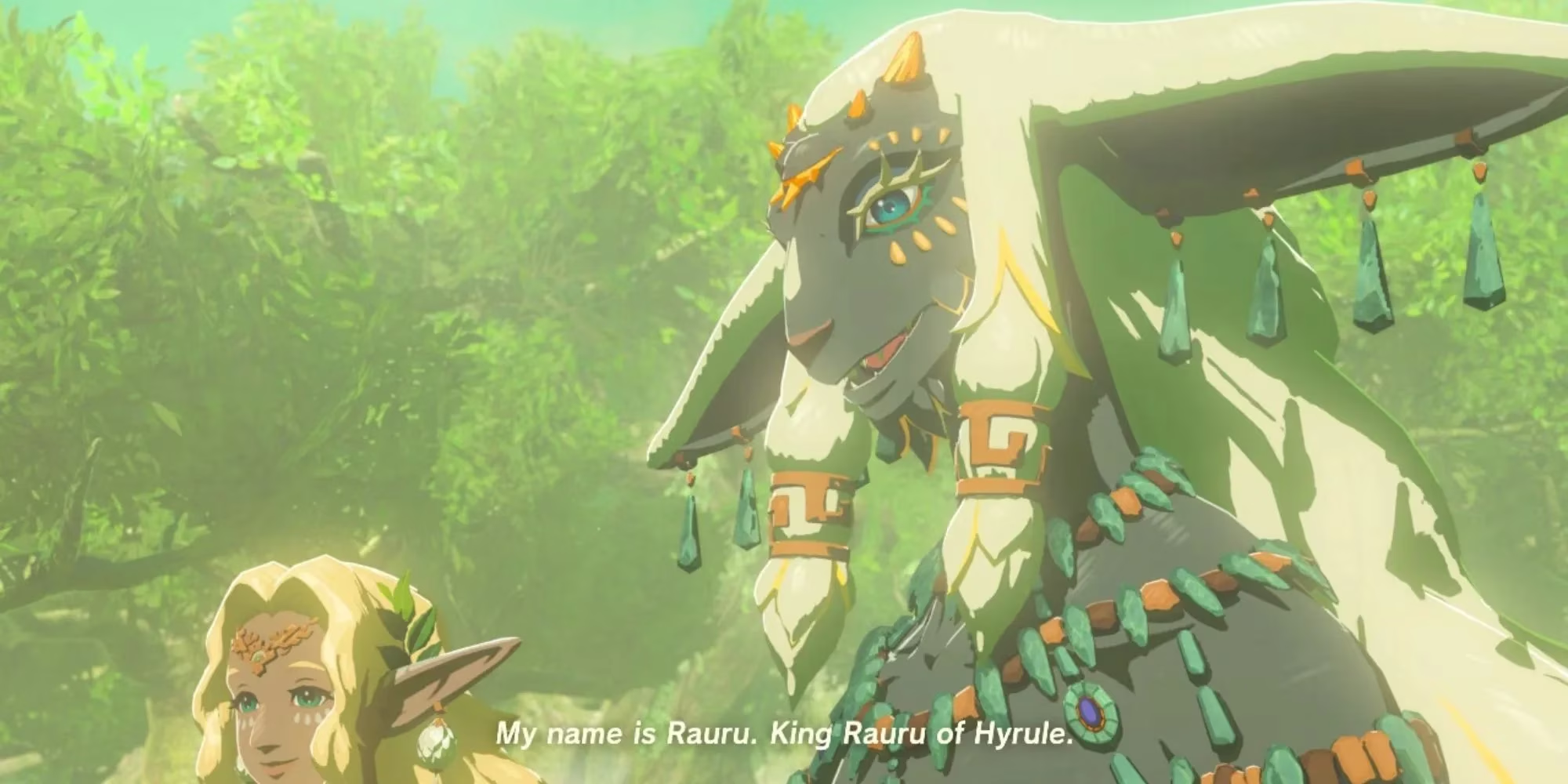
The appearance of King Rauru, the first Zonai king, is a deliberate nod to series veterans. He shares his name with the Sage of Light from Ocarina of Time, and their roles are strikingly similar. Both act as guides to a Link awakening to a great destiny, providing crucial wisdom and context. This connection is likely more than a simple Easter egg; it positions this era's Rauru as fulfilling the same archetypal role of the Sage of Light, a beacon of wisdom across vastly different epochs. He is the lighthouse keeper in the storm of time, his purpose unchanged even as the seas of history shift around him.
Deciphering History: The Stone Tablets
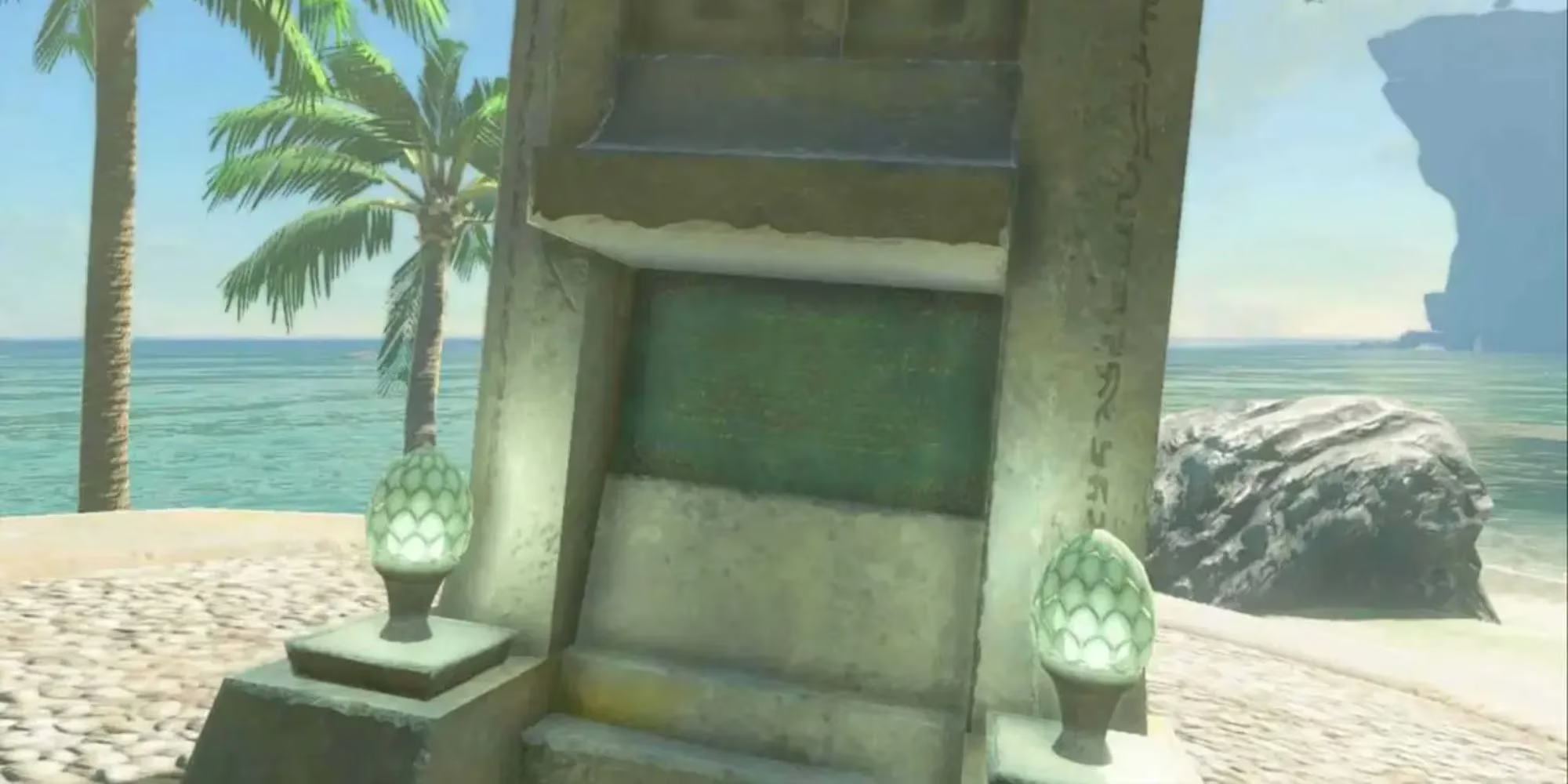
The Side Adventure "Messages from an Ancient Era" unveils fragmented history through stone tablets fallen from the sky. Deciphered with the help of Wortsworth in Kakariko Village, these texts offer intimate glimpses into the past:
-
They detail the relationships between King Rauru, Queen Sonia, and his sister Mineru.
-
Crucially, they confirm Princess Zelda's presence during the Sky Islands' initial emergence in the ancient past.
-
Perhaps most intriguingly, the author of these tablets is implied to have witnessed the fall of the Zonai-era royalty and lived on, a solitary chronicler of a lost age. These tablets are the scattered pages of a royal diary, weathered by millennia but still whispering its secrets.
The Vanishing Act of Sheikah Technology
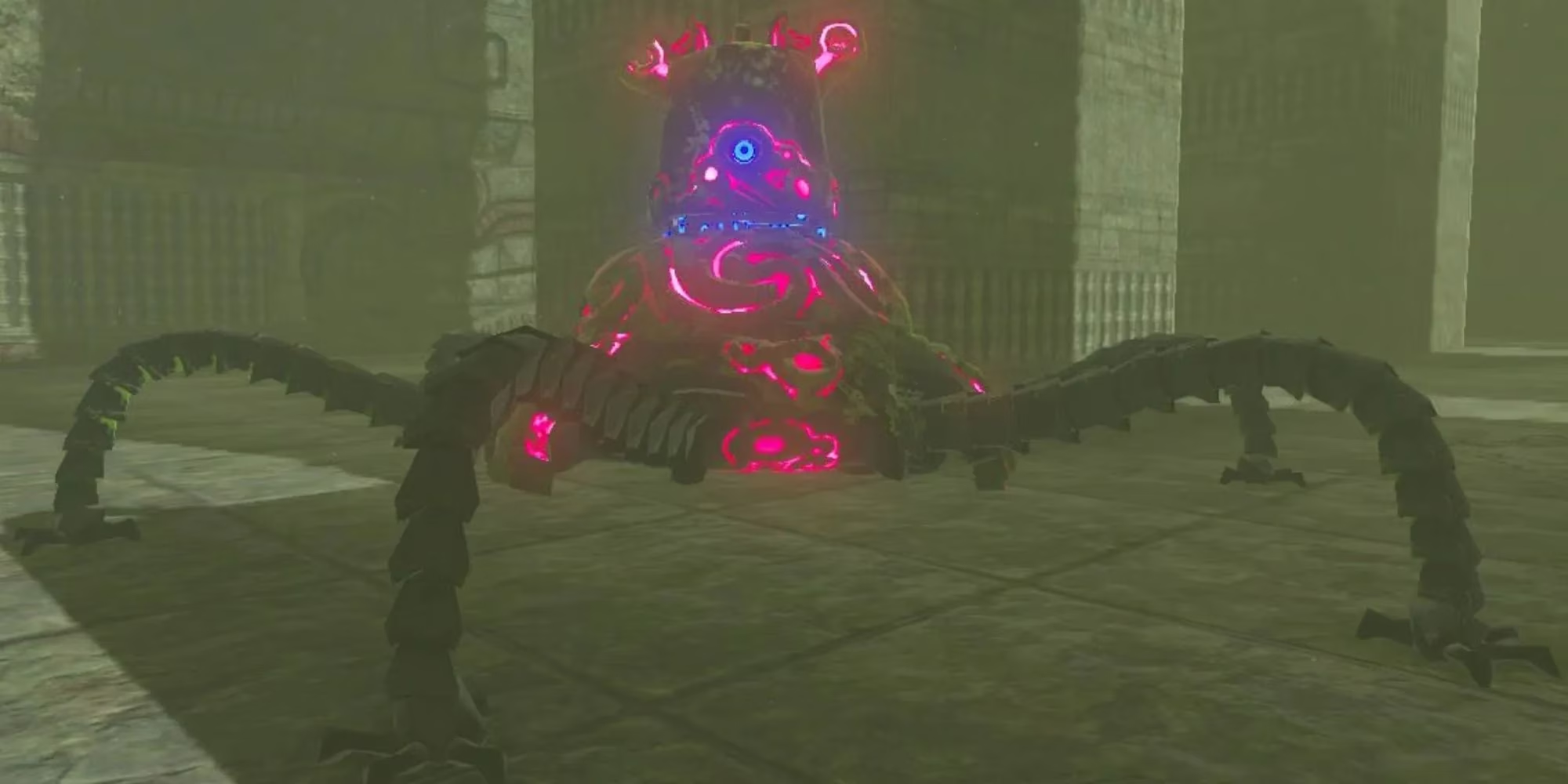
A major point of curiosity is the complete absence of Sheikah technology—Towers, Guardians, and the Sheikah Slate—which was ubiquitous in Breath of the Wild. Director Fujibayashi clarified this was an intentional narrative choice. The technology mysteriously vanished and was reabsorbed by the land shortly after Calamity Ganon's defeat. This serves a dual purpose: it visually signifies a Hyrule moving on from its previous crisis, and it deepens the world's mystery. The disappearance is presented not as a plot hole, but as another of Hyrule's enigmatic cycles, where one form of ancient magic recedes to make way for another, like a technological tide ebbing to reveal the Zonai shoreline beneath.
The Divine Dragons: Goddesses Made Flesh
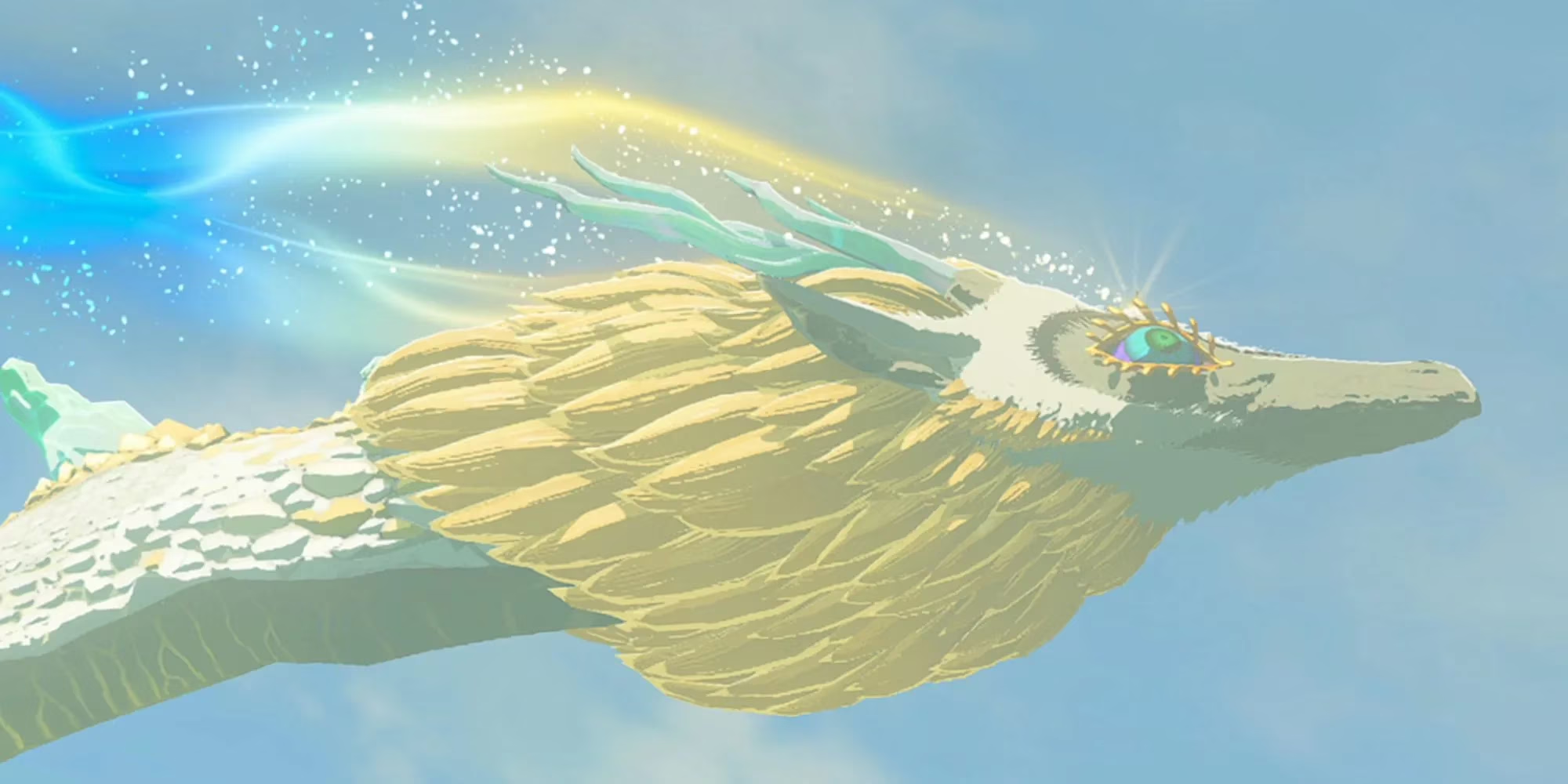
Princess Zelda's transformation into the immortal Light Dragon to restore the Master Sword provides a key to understanding Hyrule's other eternal drakes: Farosh, Naydra, and Dinraal. Their names are clear derivatives of the creation goddesses—Farore, Nayru, and Din. This lore, combined with Zelda's own lineage from the goddess Hylia, strongly suggests that these four dragons are the current, diminished physical manifestations of Hyrule's founding divinities. They are the lingering echoes of creation, now reduced to elemental spirits eternally coursing through the skies, their divine consciousness faded into instinctual, majestic patrols.
Satori: The Spirit of Exploration
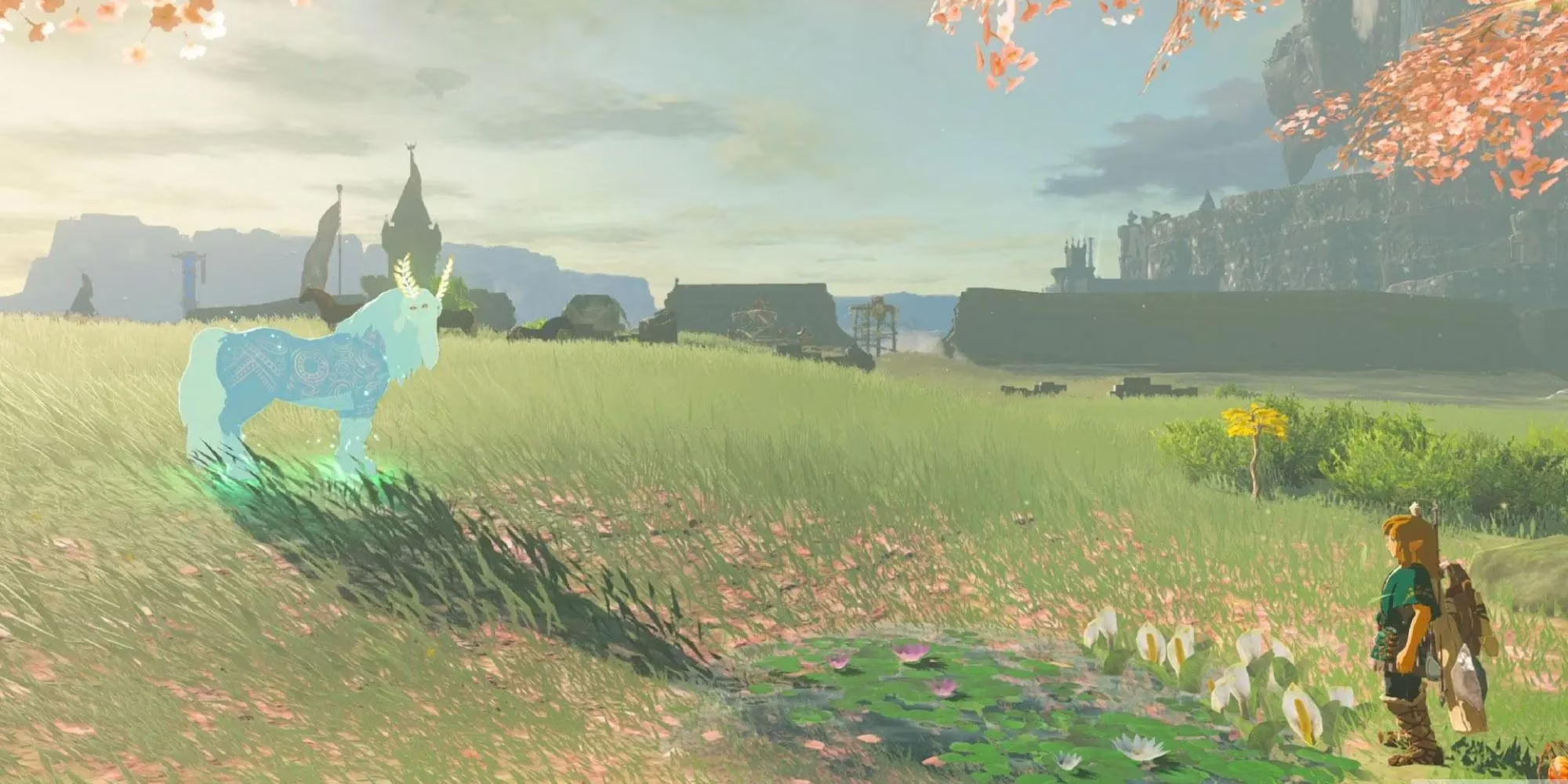
The rare cherry blossom trees scattered across Hyrule are far more than scenery. Offering a single piece of fruit at their small altars summons the serene, deer-like spirit Satori. Upon appearing, Satori illuminates nearby hidden caves with beams of light for a limited time. This mechanic is a elegant, lore-friendly way to encourage exploration, directly helping players find caves containing Bubbul gems, Brightbloom Seeds, and other treasures. A map detailing all cherry blossom tree locations can be found in the Outskirts Stable, making Satori not just a mystical being, but a systematic guide for completionists. The spirit acts as the gentle curator of Hyrule's hidden galleries, briefly illuminating the paths to its unseen wonders.
In summary, Tears of the Kingdom builds its world with layers of intentional, connective lore. From the predetermined aid of the Shrines and the cyclical nature of evil to the literal afterlife beneath and the divine dragons above, every element is a piece of a grand, historical puzzle. These details ensure that even years after its release, Hyrule remains a land where every shadow holds a story and every light reveals a deeper truth.