
The Zonai After Tears of the Kingdom: How Future Zelda Games Could Remix the Sky Tribe
The Legend of Zelda: Tears of the Kingdom leaves the ancient Zonai intentionally vague, giving future Zelda titles room to reimagine them.
Even after years of hype and a launch that felt like a thunderclap, The Legend of Zelda: Tears of the Kingdom still looms large over the franchise in 2026. Ultrahand builds, physics chaos, rocket shields—players have embraced the sandbox wholeheartedly. But the story side also left a massive, floating question mark: who exactly were the Zonai? Only two living members appear in the plot, Rauru and Mineru, with a third hinted at somewhere beyond the clouds. The game treats them like ancient celebrities who dipped out before the afterparty. That vagueness is a feature, not a bug. It gives future Zelda titles a blank check to reinterpret the Zonai in all sorts of gleefully weird ways.
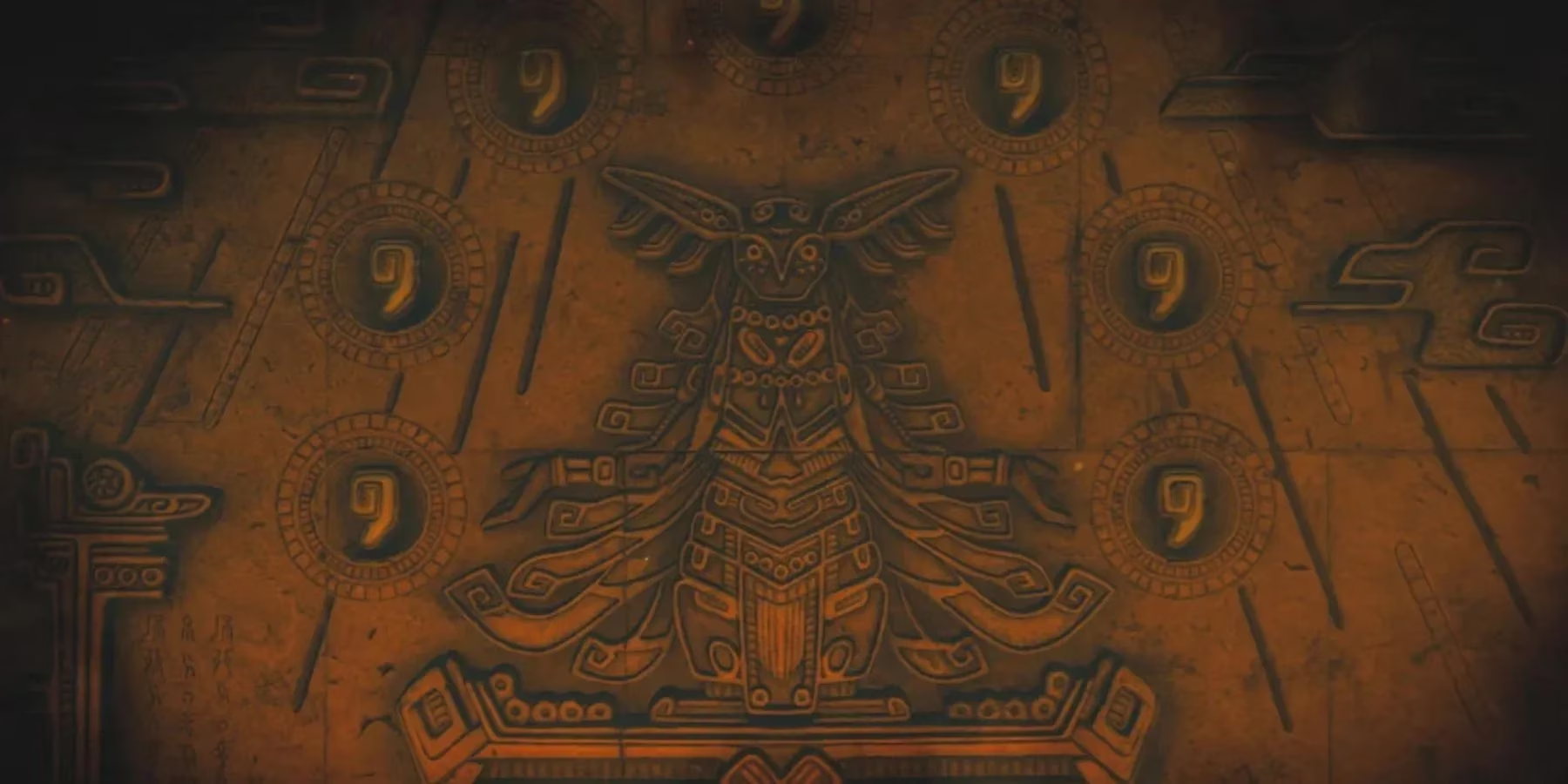
For all their godlike energy, the Zonai fit surprisingly well with the oddball tribes already scattered across Hyrule. The Gerudo, Gorons, Sheikah, Zora, Rito, and Koroks each have their own lane. The Zonai blend the sky-bound mystique of the Oocca with the history-shaping weirdness of the Twili and the tiny meddling of the Minish. They are animalistic, technologically bonkers, and emotionally distant—like that one neighbor who owns a drone and never waves back. Because Tears of the Kingdom kept their history intentionally fuzzy, Nintendo can either shelve them for a while or quietly sprinkle them into future games without breaking a sweat.
| Zonai Trait | Similar Zelda Tribe | Shared Vibe |
|---|---|---|
| Sky-dwelling isolation | Oocca | Floating above the drama |
| Mysterious, reality-warping influence | Twili | Ancient history with big consequences |
| Small, overlooked meddlers | Minish | They were there all along |
If a future game returns to the world of Breath of the Wild and Tears of the Kingdom, the Zonai would almost certainly have to show up in some form. Maybe a new Zonai NPC rolls into town with a floating skateboard and a concerning amount of knowledge about ancient batteries. Maybe the protagonists stumble onto a hidden Zonai settlement still running on emergency power. The biggest hurdle is Nintendo’s long-standing habit of refusing to over-explain its cosmology. The company loves to leave maps only half-drawn, and the Zonai are currently the biggest “here be dragons” area on the chart. That means the original incarnation might remain a one-off, but fresh spins on old concepts are basically Zelda’s love language.
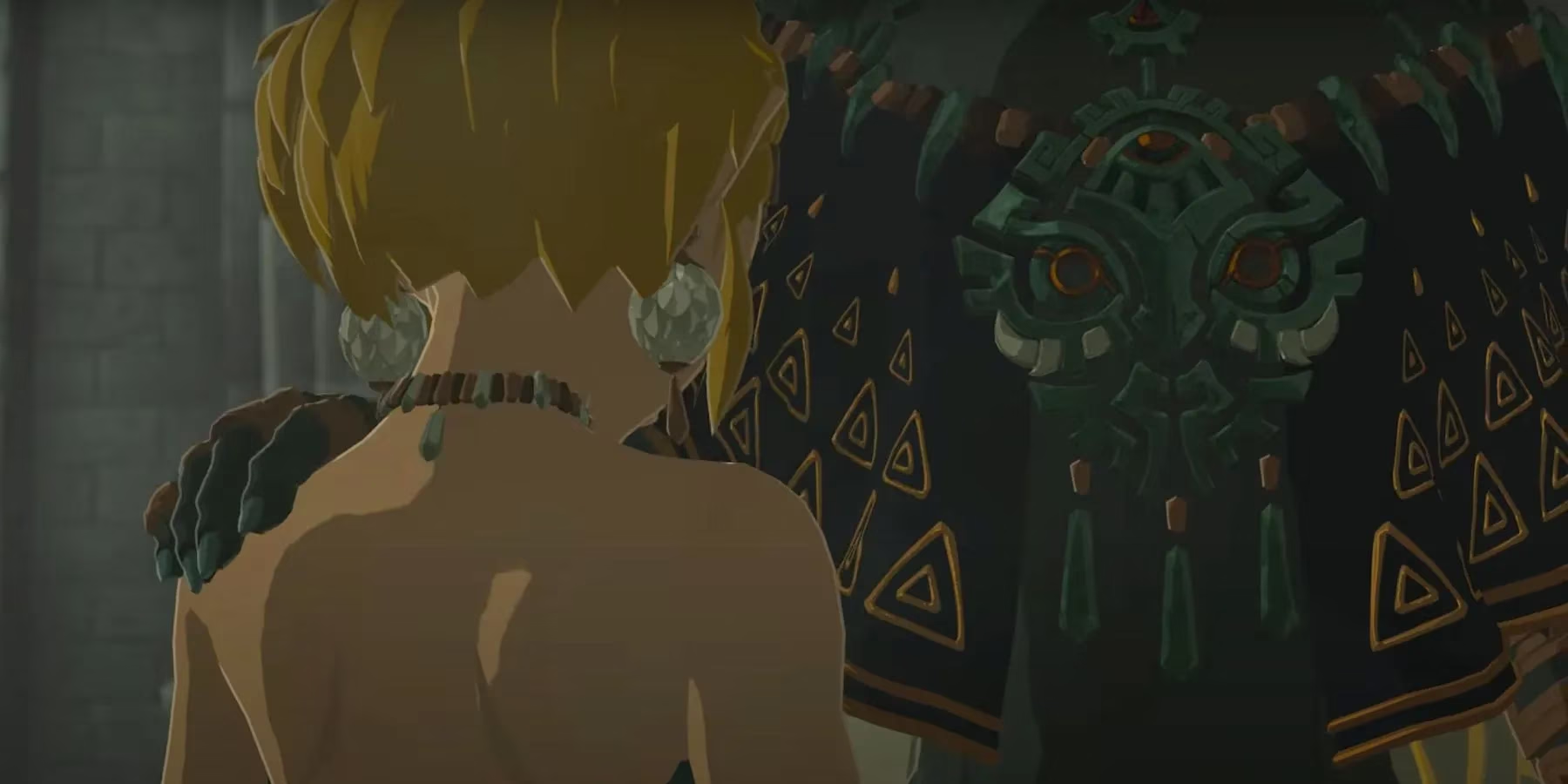
One comedic but plausible route is a full alternative take on Zelda lore. Imagine a Hyrule where the Zonai are not extinct demigods but a reclusive tribe of engineers and mages, sequestered in a floating region that only appears during specific weather. A Mineru-like engineer could join the main cast and constantly sigh at the hero’s lack of architectural sense. A Rauru-style mage could appear, calm and cryptic, while the player just wants to know why the ancient tech always explodes at the worst moment. If Nintendo wants to keep Ultrahand-style building in future titles, the Zonai are the perfect in-universe excuse. “Oh, that magical glue? Zonai tech, obviously.” It is the franchise’s equivalent of blaming everything on Bluetooth.
Alternatively, the Zonai could become regular figures in historical texts and environmental storytelling. No need to show living Zonai at all. Ruined sky platforms, faded murals, and ancient receipts for enormous stone golems could tell the story. They might be portrayed as keepers of the Triforce or its equivalent, servants of the gods, or simply an advanced civilization that got too ambitious and paid the price. Their lack of definition means they can fill almost any niche. Need a forgotten race that built the dungeon? Zonai. Need a reason the floating island exists? Zonai. Need a tragic backstory for a mysterious relic? Zonai again. They are the Swiss Army knife of Zelda lore, and that is exactly why they are so useful.
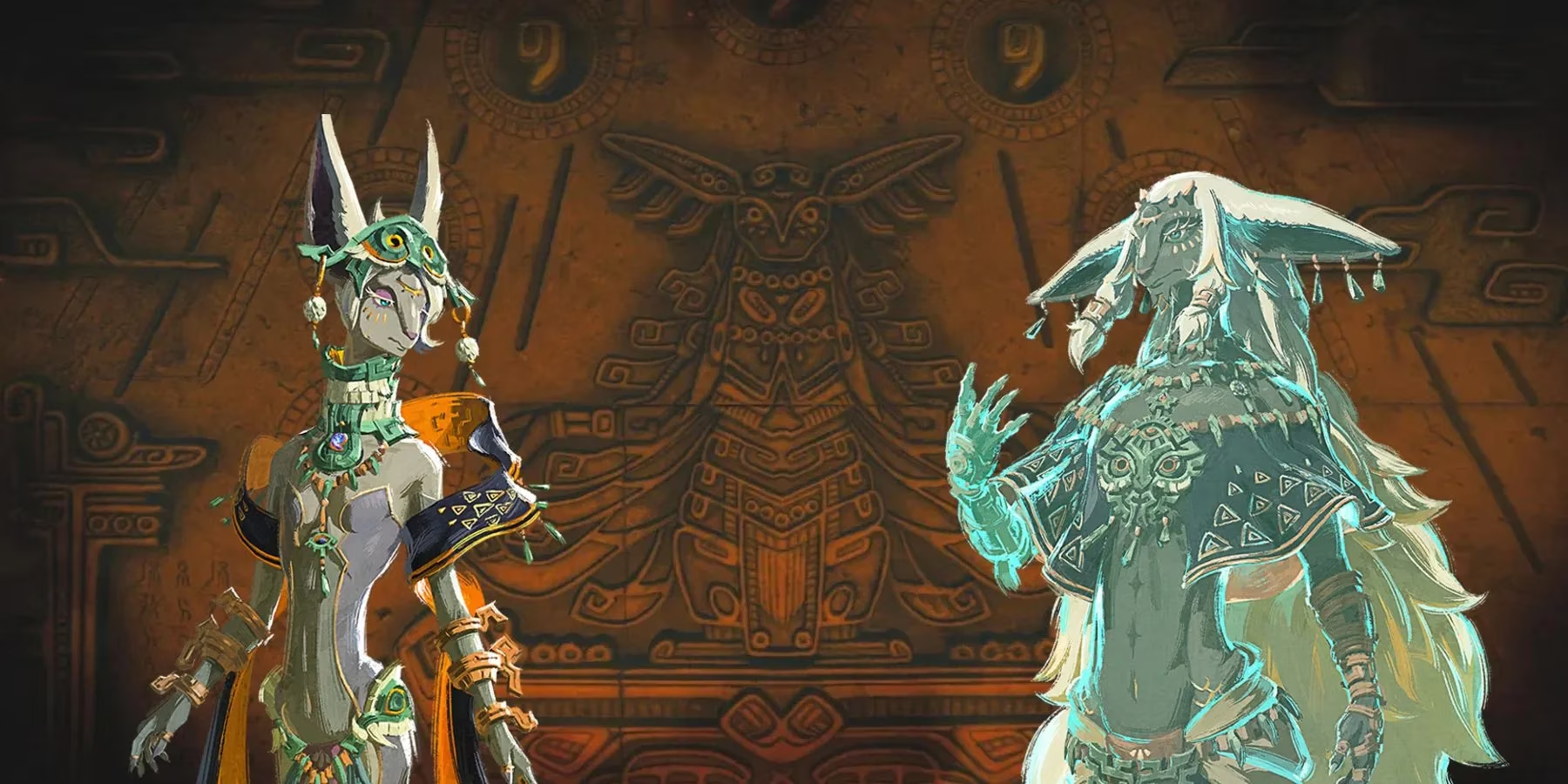
Of course, there is a risk. If Nintendo overuses the Zonai, they could become the video game equivalent of a celebrity who shows up at every party uninvited. A little mystery goes a long way. The best move might be to keep them scarce—maybe one Zonai character, one crumbling ruin, and a whole lot of unanswered questions. That restraint would keep the tribe feeling special while still letting players argue online about what the Zonai actually were. Given how much fans love a good theory, leaving the Zonai partially unexplained is basically free marketing.
As of 2026, Tears of the Kingdom remains available on the Nintendo Switch, and the Zonai still refuse to hand over their full backstory. Some fans have even argued that any hypothetical follow-up should focus on Rauru and Sonia, since the Zonai’s ancient soap opera has plenty of untapped material. Whether they return as reclusive engineers, ancient text cameos, or the main reason the next floating island exists, their future is wide open. Nintendo has a habit of letting cool ideas marinate for a while before bringing them back in unexpected shapes. The Zonai are no exception. For now, players can only look up at the sky, imagine a hidden Zonai city, and hope that one day a future Link gets to knock on its door—preferably with a rocket shield in hand. 🚀