
The Triforce Must Return: Why Zelda's Next Adventure Needs Its Iconic Relic
The iconic Triforce, a cornerstone of Zelda lore, must return in the next game to restore the series' narrative heart and depth.
In the vast, breathtaking landscapes of Hyrule explored in recent years, a profound silence echoes where a golden glow once shone. Between the monumental adventures of The Legend of Zelda: Breath of the Wild and its successor, Tears of the Kingdom, the legendary Triforce—a cornerstone of the series' identity—has been conspicuously absent. This sacred relic, embodying Power, Wisdom, and Courage, has long been the narrative engine driving the eternal conflict between Link, Princess Zelda, and the embodiment of malice, Ganondorf. Yet, in the Switch era's defining titles, it was sidelined, its role usurped by new macguffins like the enigmatic Secret Stones. As the gaming world looks beyond the triumphs of Tears of the Kingdom, a consensus is growing: the next chapter in this legendary saga must herald the long-awaited return of the Triforce.
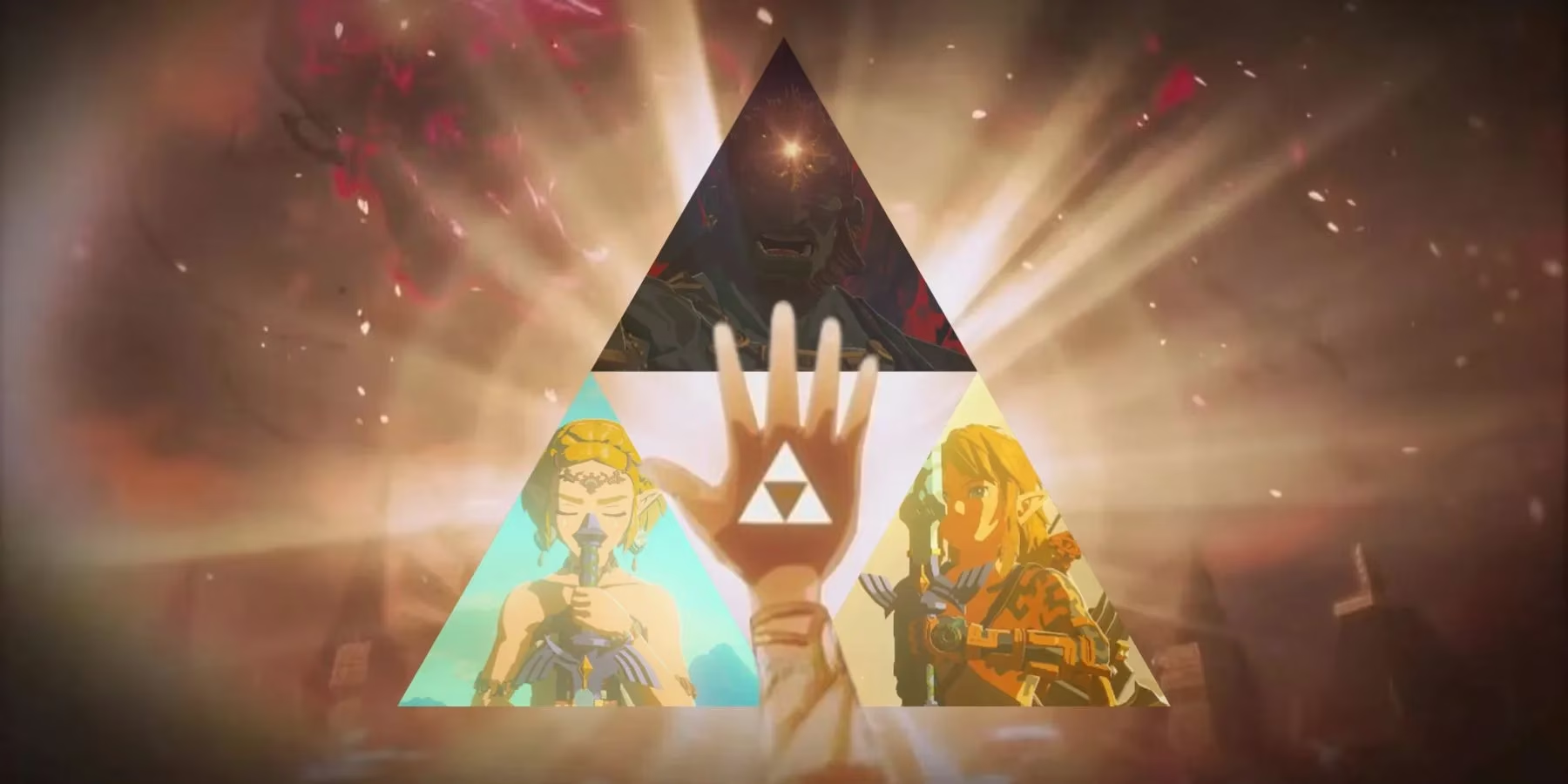
🔍 The Triforce's Legacy: More Than Just a Symbol
Since the dawn of the Zelda timeline, the Triforce has been the ultimate prize and the source of cataclysmic events. It's not merely a plot device; it's the metaphysical heart of Hyrule. Its influence is woven into the fabric of countless tales:
-
The Driving Goal: In classics like The Wind Waker, the entire quest revolves around gathering its scattered pieces to restore balance and confront Ganondorf.
-
The Catalyst for Evil: Games such as A Link Between Worlds see villains like Yuga stealing the Triforce with the sole purpose of resurrecting Ganon, proving its power is the ultimate temptation.
-
The Backbone of Lore: Even in stories that introduce new realms and artifacts, like Twilight Princess with its Twilight Realm and Fused Shadow, the Triforce provides crucial historical context. It explained the origins of the Dark Interlopers, adding layers of depth without needing to be the central focus.
This history makes its recent disappearance all the more jarring. For two consecutive, generation-defining games, this pivotal element has been missing in action.
⚖️ Learning from the Past: Integration Over Domination
The call for the Triforce's return isn't a demand for a simplistic, nostalgia-driven plot. The brilliance of the Zelda series lies in its ability to evolve. Games like Twilight Princess and the Oracle duology offer the perfect blueprint. They demonstrate how the Triforce can be seamlessly integrated to enhance world-building and narrative depth without overshadowing new gameplay mechanics or original story arcs.
| Game Example | How the Triforce Was Used | Narrative Impact |
|---|---|---|
| Twilight Princess | Key to the backstory of the Twilight Realm and the Interlopers. | Added mythological weight and explained the realm's existence. |
| Oracle of Ages/Seasons | Appeared as a unifying element between the two linked adventures. | Served as a narrative anchor connecting parallel worlds. |
| Skyward Sword HD | Central to the origin story of the Master Sword and Hyrule itself. | Established the foundational lore for the entire series. |
This table shows that the Triforce's role can be flexible—it can be the main quest, a historical artifact, or a symbolic anchor.
🚨 The Risk of Continued Absence
Allowing a third major title to ignore the Triforce would set a dangerous precedent. It would begin to feel less like an innovative narrative choice and more like a deliberate excision of a core series identity. Breath of the Wild and Tears of the Kingdom were rightfully praised for their revolutionary open-world design, but their departure from series staples was significant. The Triforce's revival represents a golden opportunity for the next game to strike a perfect balance—marrying the groundbreaking freedom of the modern titles with the rich, iconic lore that long-time fans cherish.
Imagine a new Hyrule, or perhaps a never-before-seen kingdom, where the rediscovery of a forgotten Triforce piece becomes a pivotal moment. It could unlock ancient dungeons, reveal hidden truths about the Zonai or other civilizations, or even alter the very landscape itself. Its return could be the key to answering lingering questions from the last two games while forging a new path forward.
✨ A Vision for the Future
As we look ahead to 2026 and beyond, the next Legend of Zelda game stands at a crossroads. It has the chance to learn from the entire legacy:
-
Embrace the Core Lore: Reintroduce the Triforce in a meaningful way, whether as a central quest item or a foundational part of the world's history.
-
Innovate Within Tradition: Use the Triforce to enable new gameplay mechanics—perhaps each piece temporarily grants Link unique, transformative abilities related to Power, Wisdom, and Courage.
-
Reassure and Excite: For the dedicated fanbase, seeing the iconic golden triangles shine again would be a powerful signal that the series honors its roots even as it soars to new heights.
The Triforce is more than a symbol; it's the essence of the balance that defines Hyrule. Its prolonged absence has created a narrative vacuum. The next hero's journey must, in some capacity, seek its light once more. It's time to restore the balance. It's time for the Triforce to return. 🌟