
The Shockingly Dark Depths of Tears of the Kingdom's Regional Phenomena
Tears of the Kingdom's Regional Phenomena quests blend ecological horror and personal tragedy, forging shockingly dark tales that still haunt players.
In 2023, Hyrule once again cried out for a hero, but the adventure that unfolded in The Legend of Zelda: Tears of the Kingdom carried a weight far heavier than any of Link’s previous journeys. The four Regional Phenomena quests, which formed the backbone of the game’s main storyline, seemed at first like classic Zelda fare: travel to distant lands, solve a local crisis, and gain a new ally. Yet, beneath the colorful surface, these quests wove some of the most nightmarish scenarios ever to grace the series. Even three years later, the disturbing brilliance of those tales continues to haunt players.
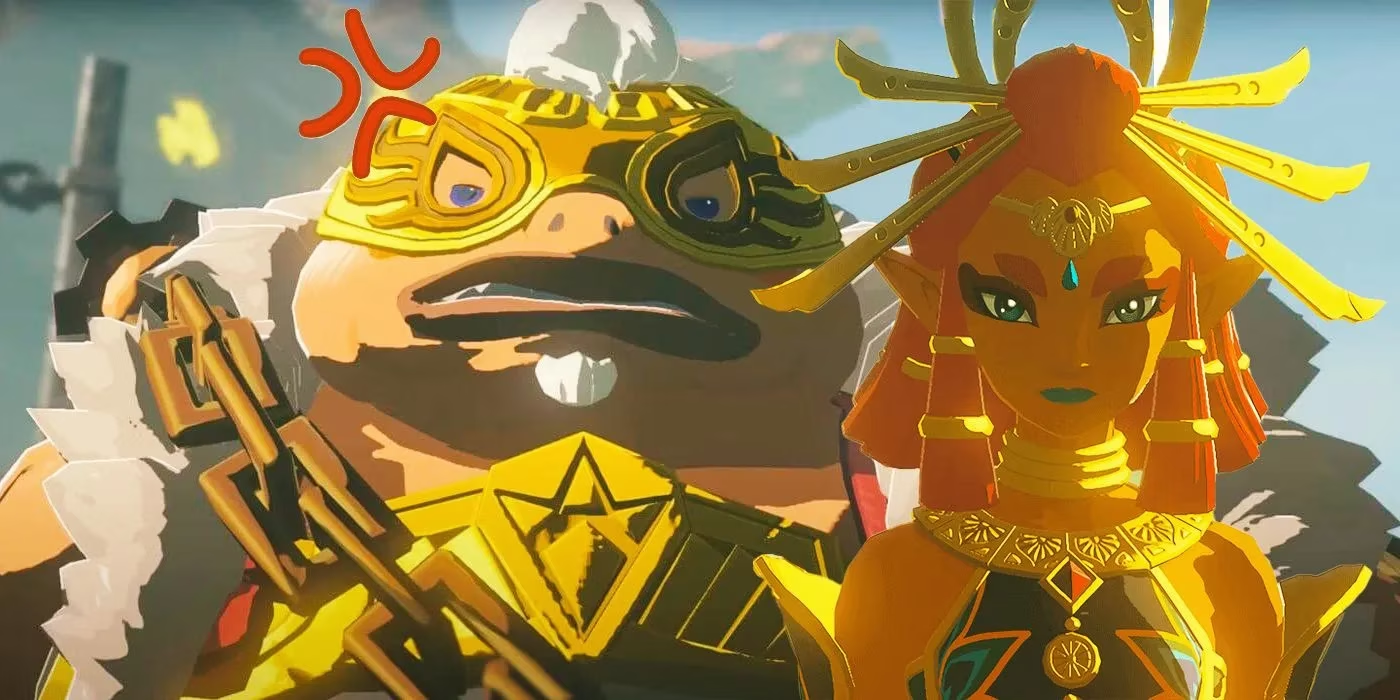
Link had barely set foot on the surface when the full scope of the Upheaval became clear. Ganondorf’s malice had seeped into every corner of the kingdom, and the Regional Phenomena were not mere inconveniences—they were systematic attempts to break the spirits of Hyrule’s greatest warriors. As Link traveled from region to region, he found that each sage-to-be was already trapped in a personal hell, their people pushed to the brink of extinction by disasters that seemed tailor-made to exploit their deepest vulnerabilities.
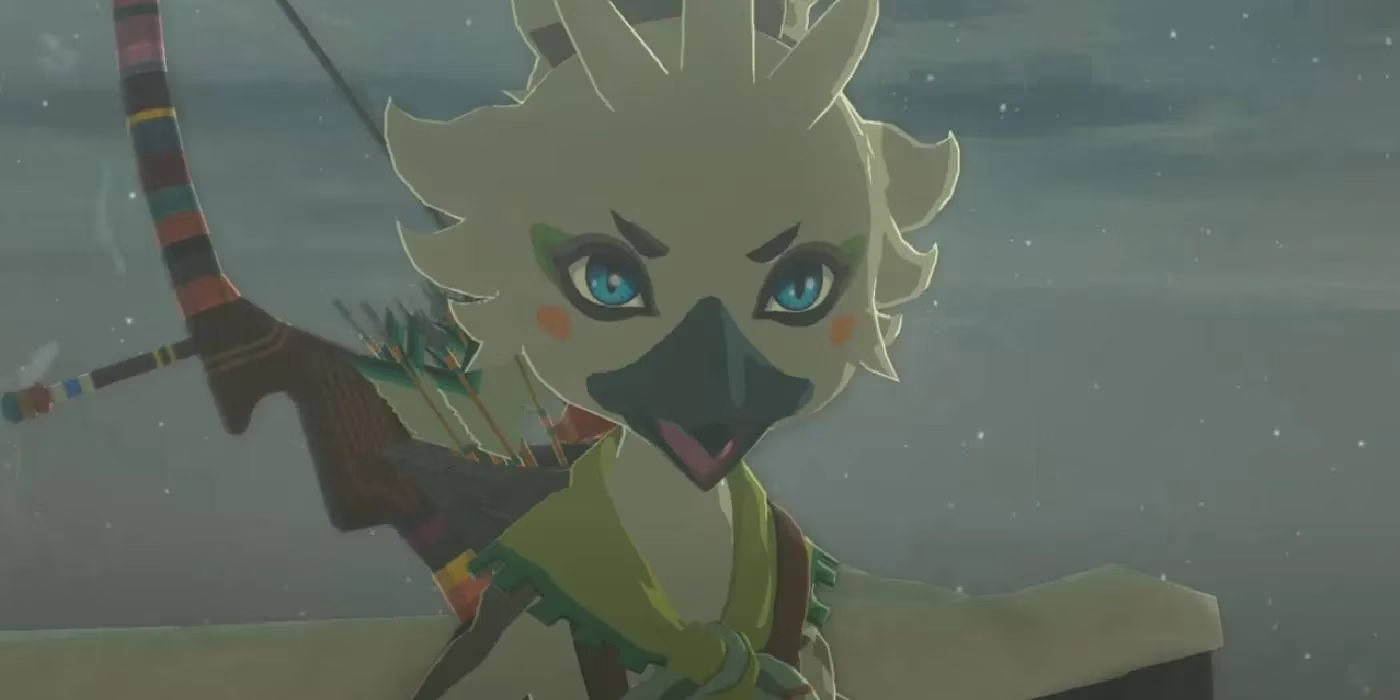
What was it about these quests that felt so profoundly darker than anything before? The answer lies in the chilling fusion of ecological horror and personal tragedy. Take the Rito Village, for instance. A brutal blizzard, summoned by the flying beast Colgera, had choked the skies and isolated the village. Most of the adult Rito had been forced to abandon their homes to search for food, leaving behind a flock of children to keep the settlement running. The image of tiny Tulin, barely more than a fledgling, throwing himself into deadly aerial battles was both inspiring and deeply unsettling. Could anyone truly expect a child to shoulder such responsibility? Yet, without Link’s arrival, the Rito might have faced a slow, cold extinction, their young crushed by a burden no one should ever carry.
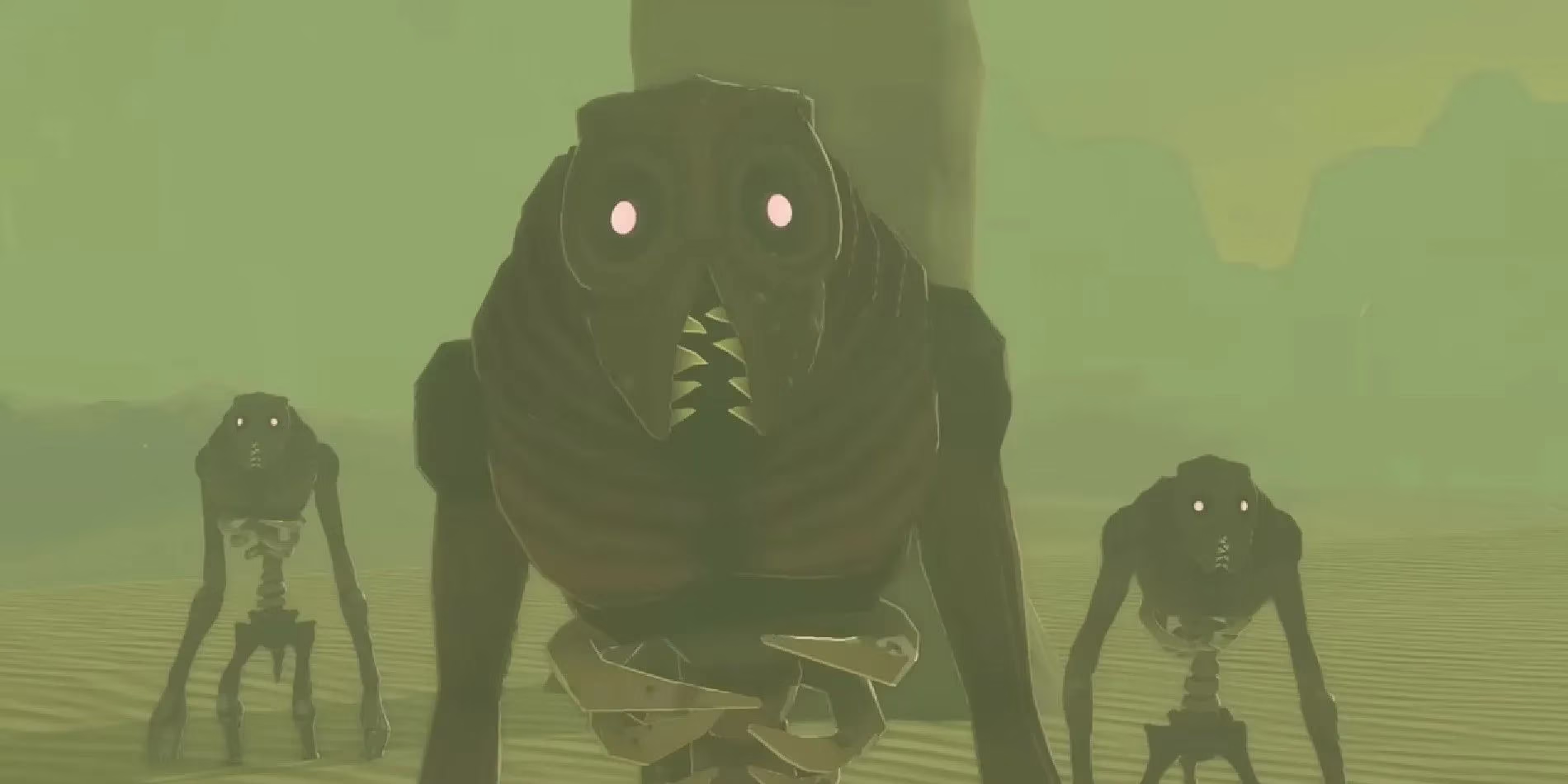
The Gerudo faced a crisis that seemed ripped straight from a survival horror story. An endless sandstorm had blotted out the sun, but the true terror came with the Gibdo—monstrous, mummified horrors that shambled out of the dust and seemed impervious to blade and arrow. Riju, the young chief, had evacuated her people into an ancient underground bunker, but the tunnels offered only a temporary reprieve. The scene was a classic zombie siege, with Gibdo lunging through the howling sands to drag warriors away. How long could a girl, no matter how gifted with lightning and blade, hold back an army of the near-dead? The answer hung by a thread until Link joined the fray.
If the Gerudo nightmare was loud and visceral, the suffering in Zora’s Domain was cruelly silent. A deluge of sludge rained from the sky, poisoning the waters and clogging the gills of any Zora unfortunate enough to be caught in it. Prince Sidon, once the picture of confidence, had been reduced to a solitary guardian, holding back the toxic tide with sheer willpower while his people fell sick around him. The pollution turned their very biology against them, transforming the life-giving water into a choking death. In such a moment, one had to wonder: what keeps a hero standing when the element that defines his people becomes their doom? For Sidon, it was love for his domain and the desperate hope that Link would return.
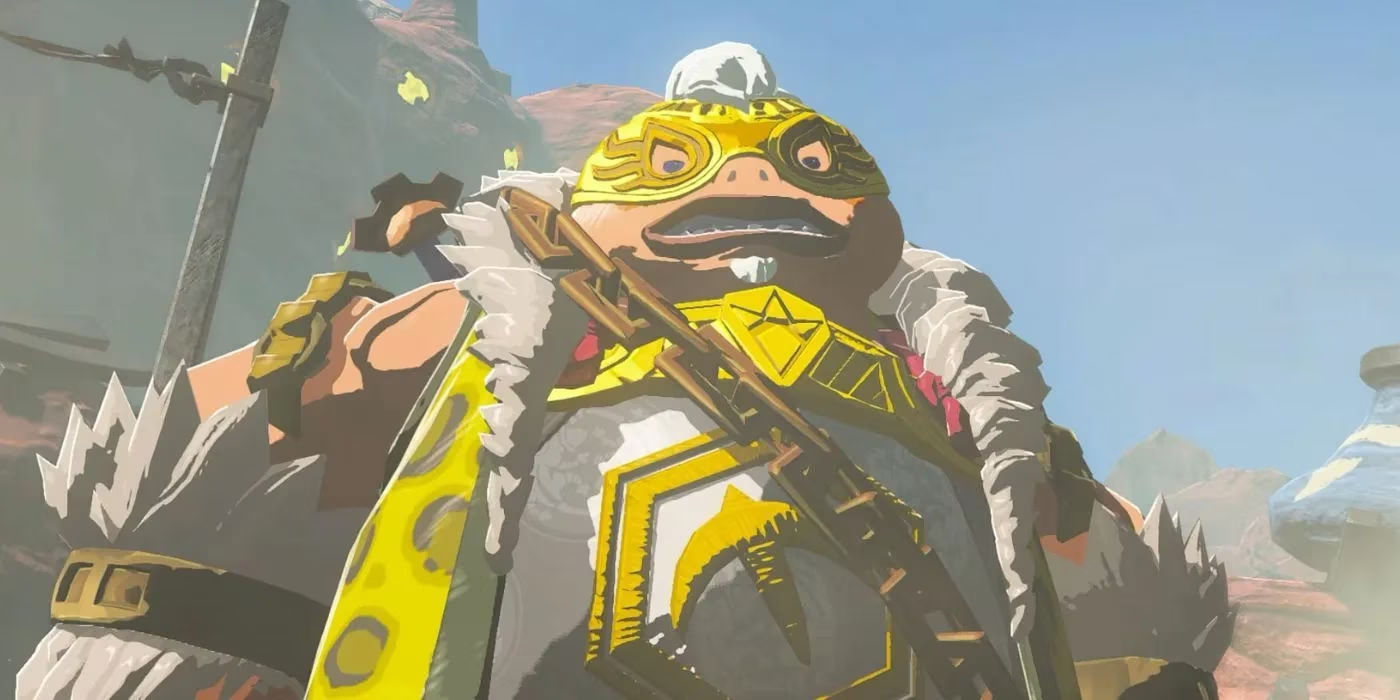
But perhaps the most insidious threat lay in Death Mountain, where the Gorons were not fighting a storm or a plague, but their own minds. The Marbled Rock, a glittering substance dropped by the giant Marbled Gohma, had become a narcotic feast. Gorons who devoured it became aggressive, lethargic, and blindly obedient to the Demon King. Yunobo, once a gentle soul, was turned into a domineering bully, a brainwashed puppet who endangered his own community. The parallels to real-world substance abuse were impossible to ignore. The tragedy here wasn’t a physical invasion; it was the disintegration of a community from within, as friends turned on friends under the influence of a delicious poison.
Every one of these sages—Tulin, Riju, Sidon, Yunobo—stood at the heart of the suffering, personally targeted by Ganondorf’s cruelty. It would have been easy for them to fall. Riju could have been overwhelmed by the Gibdo horde; Tulin could have vanished into the blizzard; Sidon might have exhausted himself into stillness; and Yunobo could have been lost forever to the mask’s control. The game never shied away from showing just how close each of them came to a grim fate.
And yet, they did not fall. With Link’s help, each sage rose to meet the darkness. Tulin’s fledgling courage became a cutting wind; Riju’s lightning shattered the undead legions; Sidon’s serene waters purified the filth; and Yunobo, stripped of his mask, broke free with a roar of shame and redemption. The very trials that were meant to destroy them instead forged Hyrule’s greatest defenders.
Looking back from 2026, the Regional Phenomena quests in Tears of the Kingdom remain a masterclass in storytelling. They forced players to confront terrifying what-ifs while never losing the series’ heart. The steady rhythm of battle and puzzle-solving could distract from the grim reality for a moment, but the images lingered: children running a frozen village, lovers separated by polluted waters, and a brother enslaved by a rock that tasted like joy. These were not simple fetch quests; they were desperate struggles for survival in a world where hope was as fragile as a single blade of silent grass.
In the end, Ganondorf’s plan was his own undoing. By pushing Hyrule’s future sages to the edge, he only gave them a reason to fight harder and a strength born from survival. The darkness of Tears of the Kingdom was not there to shock for its own sake—it was there to prove that even in a cartoonish land of bright colors, courage could shine its brightest when the nightmare seemed absolute.