
The Hyrule That Could Have Been: Unveiling the Cut Restoration Festival in Zelda: Tears of the Kingdom
Discover how the scrapped 'Hyrule Restoration Festival' in *The Legend of Zelda: Tears of the Kingdom* reveals a lost vision of Hyrule's recovery, addressing narrative and environmental dissonance in this acclaimed sequel.
In 2026, The Legend of Zelda: Tears of the Kingdom continues to be celebrated as a monumental achievement in interactive design. Its intricate, multi-layered open world and revolutionary physics systems remain a benchmark for the industry, demonstrating how to innovate within the constraints of aging hardware. However, years after its release, discussions within the dedicated player community often circle back to a persistent sense of narrative and environmental dissonance. Parts of the kingdom feel strangely static, disconnected from the cataclysmic events of Breath of the Wild and the implied passage of time. This feeling, it turns out, was not unfounded, as revelations from the game's official art book, The Legend of Zelda: Tears of the Kingdom Master Works, have shed light on a profoundly different vision for Hyrule's recovery—one centered around a major, celebratory event that never made it into the final game.
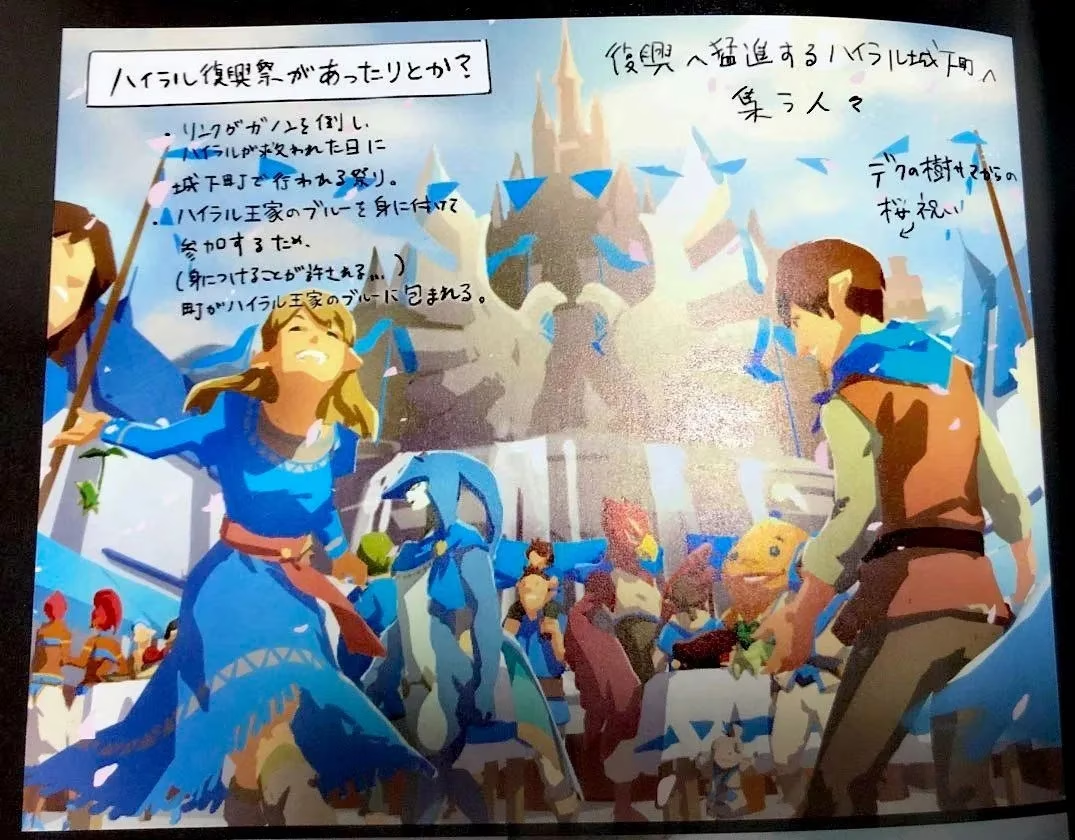
The Master Works tome, a 464-page collection released in Japan, is a treasure trove of developer insights, scrapped concepts, and early character designs. Among its most striking revelations is the planned 'Hyrule Restoration Festival.' This pivotal event was intended to be a cornerstone of the game's opening, a direct narrative and visual payoff to the previous adventure. Conceptual art depicts a thriving, reconstructed Castle Town filled with joyous Hylians, Zora, Gerudo, and Gorons. They are shown dancing and leaping in celebration, unified in their relief and gratitude for a world saved. The festival was designed to commemorate the day Link defeated Calamity Gamon, creating a powerful, emotional baseline of peace and prosperity before the new gloom-induced catastrophe descends.
This cut content explains a core narrative absence in the shipped title. In the final version of Tears of the Kingdom, Castle Town remains a haunting collection of ruins and makeshift wooden platforms. There is no central, bustling capital symbolizing Hyrule's hard-won rebirth. More curiously, many inhabitants across the land scarcely acknowledge Link's prior heroism or the kingdom's recent history. He often interacts with NPCs as a complete stranger, a narrative choice that feels incongruous for a sequel where the protagonist should be renowned. The Restoration Festival would have elegantly solved this dissonance, establishing Link and Princess Zelda as celebrated figures in a world actively healing from its trauma.
The implications of this cut are far-reaching for the game's environmental storytelling:
-
A Lost Symbol of Hope: Instead of the dilapidated ruin players explore, Castle Town was envisioned as a bustling epicenter of life. It was meant to be the primary symbol of Hyrule's resilience—a place where citizens could finally feel confident and secure after a century of terror.
-
Narrative Pacing and Stakes: Beginning the game with a grand celebration would have created a devastating contrast when the Upheaval occurs. Players would have a tangible, cherished world to fight for, making the subsequent invasion of the Gloom and the capture of Zelda far more personally impactful. The loss of peace feels sharper when you've witnessed its zenith.
-
Mechanical & Exploratory Potential: A fully realized capital city could have offered unique gameplay opportunities:
-
Varied Shops & Services: Specialized vendors for rare Zonai device components or upgraded armor sets.
-
Dynamic Citizen Routines: A large, interactive population with daily schedules and reactive dialogue based on world events.
-
Architectural Secrets: Multi-storied buildings, underground cellars, and royal archives hiding puzzles and lore entries about the kingdom's reconstruction.
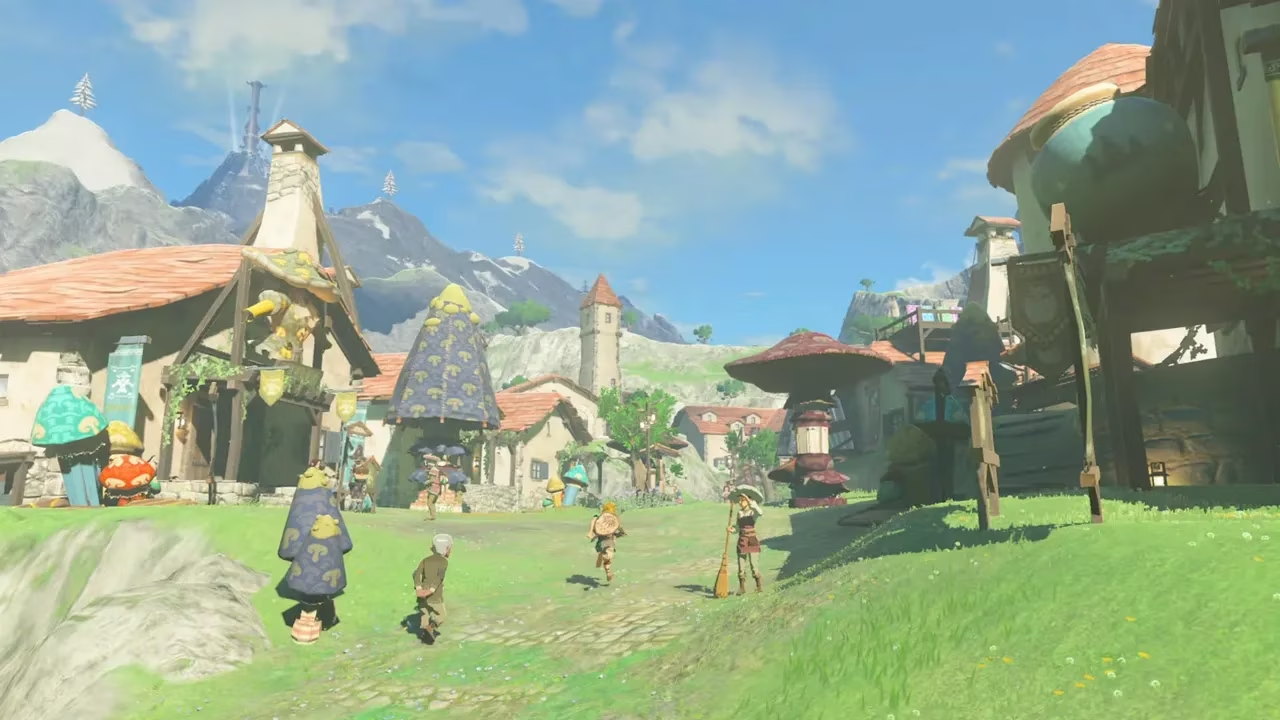
While the game brilliantly evolves mechanics and introduces the awe-inspiring Sky Islands and Depths, its surface world sometimes lacks a coherent sense of progression. Outposts are scattered across the landscape, and towns like Hateno and Kakariko are updated, yet they can feel like isolated pockets rather than parts of a recovering nation. The dynamic, systemic chemistry that defines gameplay—where elements interact in unpredictable ways—is not always mirrored in the societal evolution of Hyrule. The Restoration Festival promised a macro-scale application of that dynamism: a world that collectively remembers, celebrates, and builds upon its past.
Of course, game development is a process of difficult choices. The festival and a fully rebuilt Castle Town were likely excised due to scope, technical limitations, or a desire to maintain a certain exploratory tone focused on wilderness and discovery over urbanity. The development team prioritized the incredible verticality of the world and the depth of the crafting systems, achievements that rightly define the game's legacy.
Nevertheless, the glimpse into this alternate path leaves a poignant 'what if' sensation. Imagine concluding a quest chain to be invited to the festival grounds, where a Zora musician plays a new arrangement of the classic theme. Consider the potential of side quests involving preparing for the event, gathering decorations from each region, or helping a Goron chef prepare a feast for thousands. This vision of Hyrule wasn't just about aesthetics; it was about fulfilling a narrative promise and creating a living world that felt truly responsive to the player's prior legacy.
| Aspect | What We Got (Final Game) | What Was Planned (Cut Content) |
|---|---|---|
| Castle Town State | Ruined, wooden outpost structures. | Rebuilt, thriving capital city. |
| Link's Recognition | Often treated as a stranger. | Celebrated hero at a festival in his honor. |
| Narrative Tone Opening | Immediate mystery and new threat. | Celebration of past victory, then sudden new threat. |
| World-Building Focus | Expansion upwards (Sky) and downwards (Depths). | Consolidation and rebirth of the central surface hub. |
In the end, Tears of the Kingdom remains a masterpiece of ingenuity and scale. Yet, the revelations from the Master Works confirm a lingering sentiment among its most ardent explorers. The game gives players the tools to create almost anything, to connect disparate parts of the world with fantastic Zonai contraptions. It is a profound irony, then, that the most desired connection—a tangible, emotional link between the saved world of the past and the endangered world of the present—was part of a blueprint that remains on the cutting room floor. The ghost of the Hyrule Restoration Festival serves as a bittersweet reminder of the vibrant, grateful, and alive kingdom that players helped save, but never got to fully inhabit.