
The Future of Zelda: Why a New Direction After Breath of the Wild and Tears of the Kingdom is Essential
The Legend of Zelda: Breath of the Wild and Tears of the Kingdom revolutionized open-world gaming, making a bold new direction essential for Zelda's legacy.
As I sit here in 2026, reflecting on the monumental impact of The Legend of Zelda: Breath of the Wild and Tears of the Kingdom, I can't help but feel a surge of excitement mixed with bittersweet nostalgia. Nintendo's recent confirmation that the next Zelda adventure will leave behind the now-familiar formula of these Switch-era titans has sparked intense discussion. While some fans may lament the departure from a world they've come to love, I believe this is not just a wise move, but a necessary one for the soul of this legendary franchise. After all, what is The Legend of Zelda if not a series defined by its courage to reinvent? Haven't its most celebrated moments always sprung from bold, unexpected leaps into the unknown?
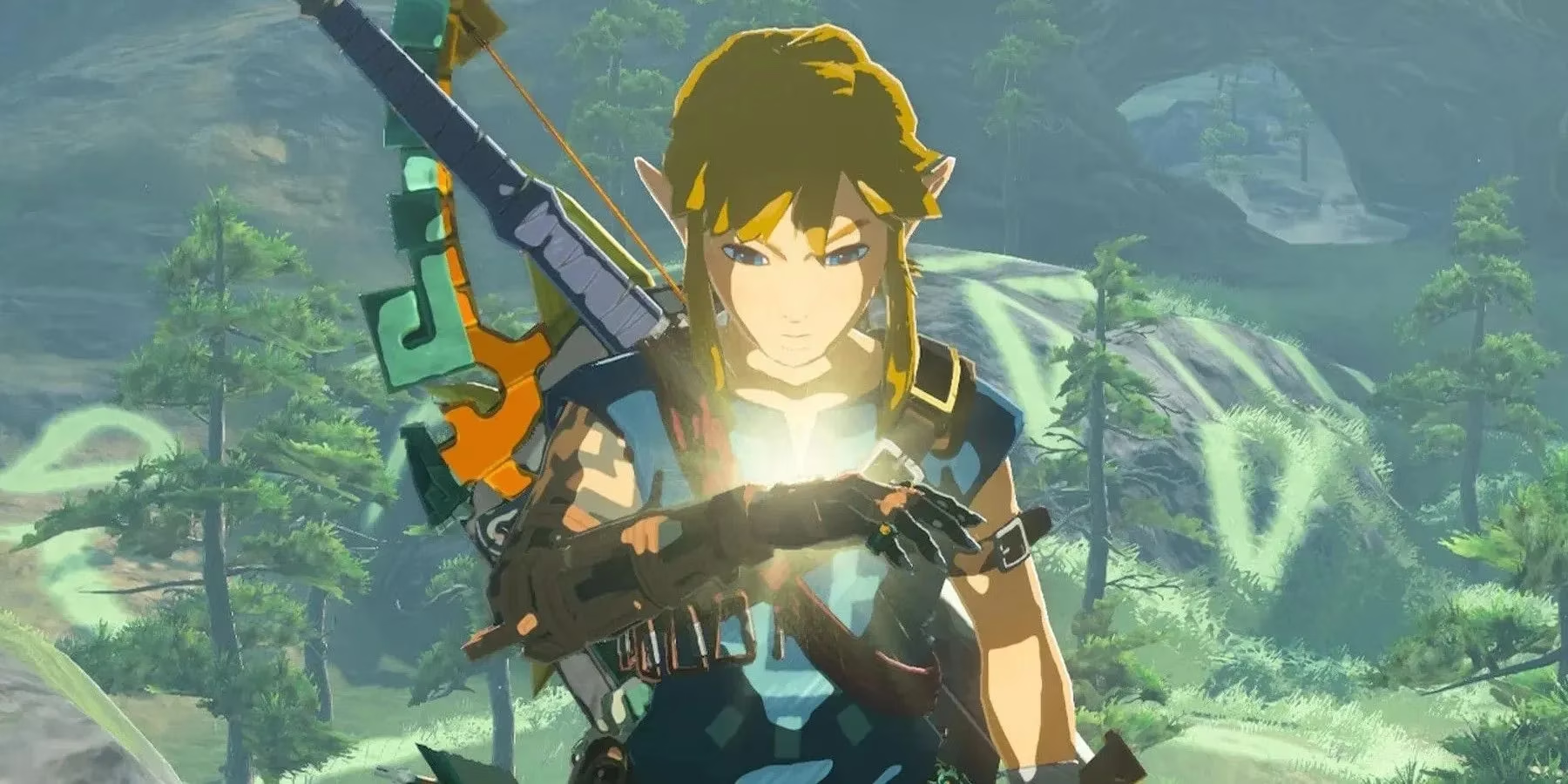
Let's be honest: the last two entries were nothing short of revolutionary. Breath of the Wild didn't just challenge open-world conventions; it shattered them, prioritizing a sense of pure, unscripted discovery that made every hilltop and hidden grove feel like a personal revelation. Then came Tears of the Kingdom, which took that foundation and empowered players in ways we'd never dreamed of. The Ultrahand and Fuse abilities weren't just mechanics; they were invitations to unleash our creativity, turning Hyrule into the ultimate physics playground. These games were commercial and critical juggernauts, reshaping not only Zelda but the entire landscape of contemporary gaming. Yet, therein lies the paradox of their success. The very completeness of their vision means that a third game in the same mold would risk feeling like an iteration rather than an evolution. The formula, as brilliant as it is, has reached a natural plateau. Isn't the true spirit of Zelda to always seek the next peak?
Consider the core identity of the BOTW/TOTK era: a vast, open-world Hyrule. This structure is so inextricably linked to these games that continuing with it would inherently tie the next project to their shadow. A new direction almost certainly means reimagining this space. Could we see a return to a more structured, linear progression that brings back the intricate, themed dungeons that were series staples? For many long-time fans, the idea of navigating complex, puzzle-filled labyrinths like the Forest Temple or the Water Temple holds a unique magic that the Shrines, for all their cleverness, couldn't quite replicate. A modern take on that classic structure, infused with new ideas, could feel like a thrilling homecoming.
But simply rewinding the clock won't be enough—not after the sheer inventive freedom we've experienced. The next game needs its own defining, groundbreaking system, a new creative pillar on the level of Ultrahand. What if the next innovation wasn't about manipulating objects, but about manipulating time or realities in a more profound way? Or perhaps a system deeply tied to narrative choices that meaningfully alter the world? Furthermore, the franchise has room to grow in tone and setting. Breath of the Wild intriguingly wove ancient sci-fi elements into its lore. What if the next game fully embraced a more futuristic or technologically advanced Hyrule, offering a stark visual and thematic contrast? Imagine a tale with more mature, complex narrative ambitions, told through cutting-edge, realistic visuals and a greater emphasis on cinematic storytelling, all while retaining that quintessential Zelda heart.
| Era | Key Innovation | Potential Next Step |
|---|---|---|
| BOTW/TOTK Era | Open-Air Exploration, Physics Systems (Ultrahand) | ??? |
| Classic Era | Linear Dungeon Progression, Themed Items | Modernized, Non-Linear Dungeon Design |
| Future Era | ??? | Narrative Depth, New Core Mechanic, Tonal Shift |
The Legend of Zelda's greatest strength has always been its aversion to complacency. Look at its history: from the top-down adventures to the 3D revolution of Ocarina of Time, from the cel-shaded voyage of The Wind Waker to the dark duality of Twilight Princess. Even less universally adored entries are remembered for their distinct identities. This commitment to reinvention is what keeps the series vital. In a gaming landscape where many long-running franchises can fall into safe, predictable patterns, Zelda's willingness to boldly change course is its superpower. A third game using the BOTW blueprint might sell millions, but would it honor the legacy of innovation that defines this series? I don't think so.
So, as we look ahead, my hope for the next chapter is built on a few key pillars:
-
A New Structural Foundation 🏰: Whether it's a reinvented linear path or a completely new type of open world, the geography of the adventure must feel fresh.
-
The Next "Ultrahand" ⚙️: A groundbreaking, player-empowering mechanic that becomes the new signature of the franchise.
-
Narrative and Tonal Ambition 🎭: A story that matches the scale of the gameplay, perhaps with more nuanced characters and mature themes.
-
Visual and Auditory Rebirth 🎨: A striking new art direction that defines the game's era as distinctly as the painterly style of BOTW did.
The departure from the Breath of the Wild era isn't an ending; it's the opening of a new, thrilling door. It's Nintendo saying, "We gave you a masterpiece, and now we're ready to build a different one." For the health and longevity of this beloved franchise, stepping away from the peak to climb a new mountain is the most Zelda thing they could do. I, for one, can't wait to see what wonders lie on the other side of that horizon. What new mysteries will we solve? What new adventures will define a generation? The future of Hyrule awaits, and it promises to be unlike anything we've held in our hands before. 🔮