
Skyward Sword Haunts Tears of the Kingdom in the Best Possible Way
Tears of the Kingdom hides Skyward Sword references, from minecarts to the Sky outfit, rewarding eagle-eyed Zelda fans.
I have a confession: I booted up The Legend of Zelda: Tears of the Kingdom in 2026 expecting to hunt Koroks, bully Bokoblins, and maybe finally learn what a Zonai device is supposed to do. Instead, I kept tripping over Skyward Sword. Not literally—Link’s 2011 adventure is not a physical object—but emotionally, mechanically, and in one case, deep underground with a chest and a bad attitude. Skyward Sword was divisive back in 2011, yet time has been kind to it; the 2021 HD remaster on Switch gave it a second wind, and now I cannot stop noticing how much of Tears of the Kingdom feels like a love letter to Link’s skydiving origin story. Nintendo did not just wink at the older game. It buried callbacks under Hyrule and dared me to bring a shovel.
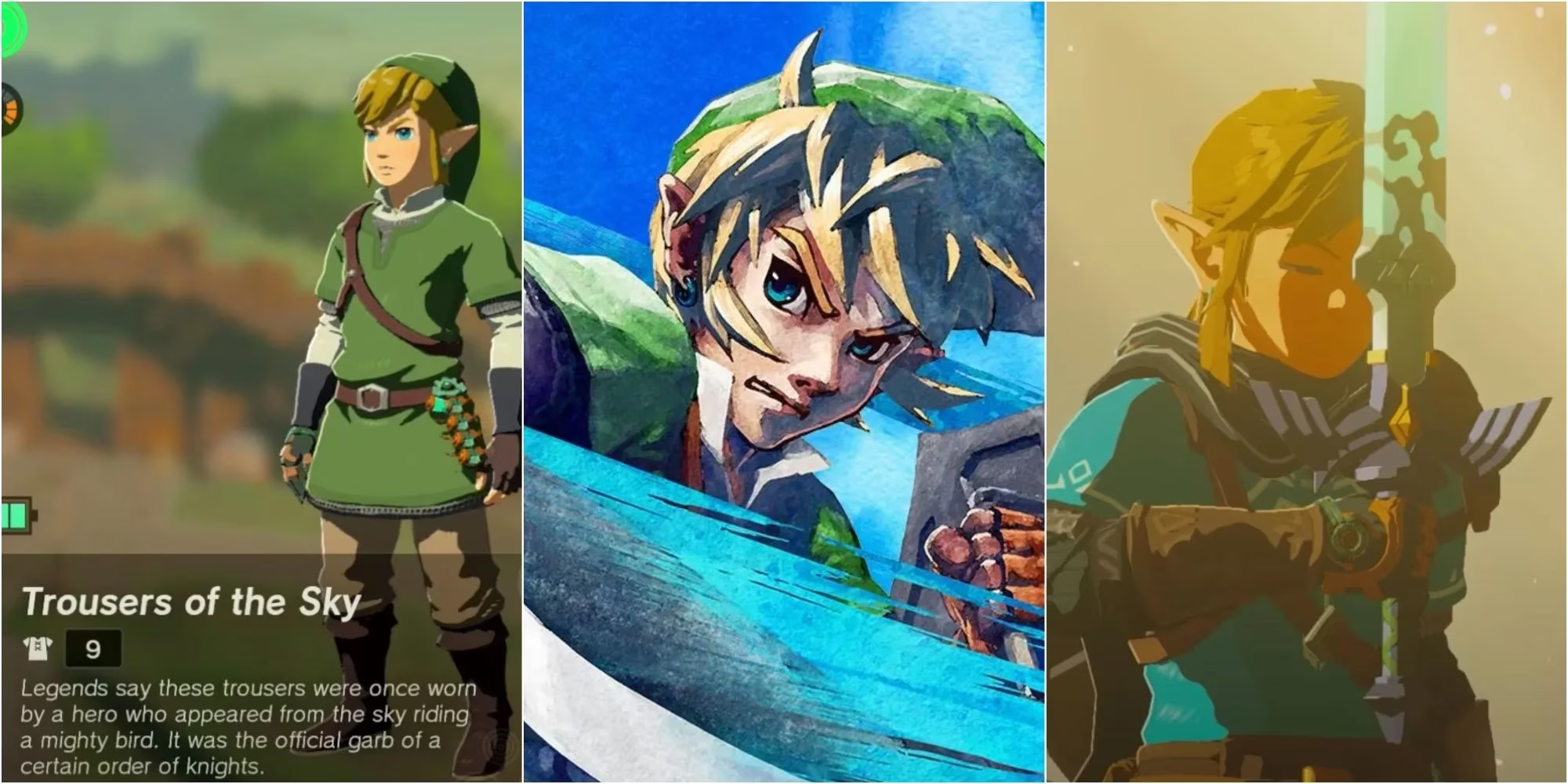
I say this as someone who has played more Zelda than is medically advisable: the references are not all obvious. Tears of the Kingdom’s Hyrule is gigantic, and I have the directional sense of a Loftwing with a grudge. Some callbacks are hidden easter eggs; others are baked into the design, the aesthetic, and the story. That is what makes the whole thing so delightful. It is not a museum tour. It is Nintendo rummaging through its own attic, finding a dusty Goddess Sword, and saying, ‘Hmm, yes, let us do that again, but with physics.’ 😅
The Minecart Habit I Cannot Quit
Nobody who finished Skyward Sword forgets the Rickety Coaster. Nobody forgets the minecart sections either, because they tested my mastery of Wii motion controls and in-game time mechanics in the same way a carnival ride tests my dignity. Tears of the Kingdom’s physics-based gameplay makes minecarts even more fun to use, but I refuse to believe the inspiration came from nowhere. When I rode a cart in Tears of the Kingdom, I heard my old Wii Remote screaming somewhere in the distance.
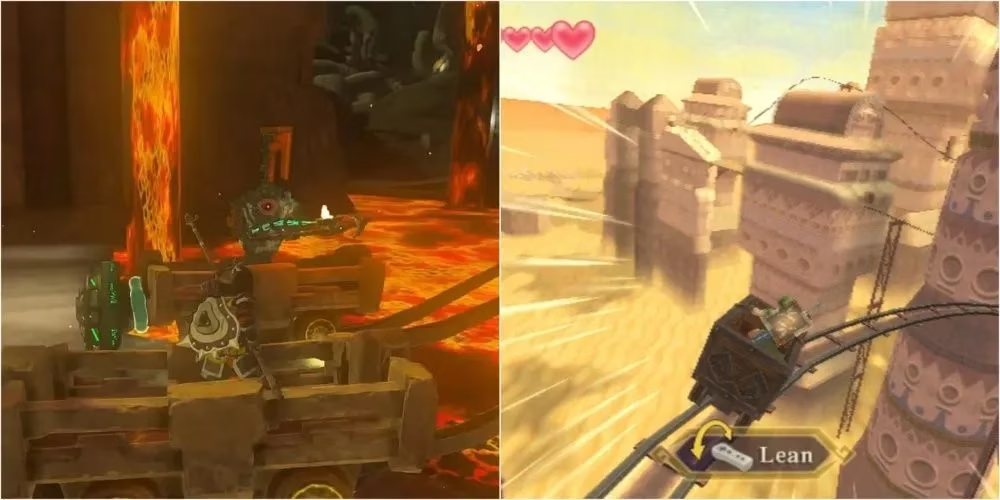
The Mine-Cart Land challenge is especially suspicious. It feels very reminiscent of the visually stunning minecart minigames that were a big feature in Skyward Sword. I went in expecting a quick ride. I came out with a renewed respect for rails, momentum, and the cruel joy of a well-placed turn. If Nintendo ever releases a standalone minecart game, I will buy it twice. Once for me, and once for the version of me who still flinches when a cart starts moving. 🛒
The Sky Outfit Is a Depths Scavenger Hunt
In Breath of the Wild, Link’s Skyward Sword getup was technically obtainable, but only by purchasing an Amiibo. In Tears of the Kingdom, Nintendo finally let me earn it in-game by seeking out chests in three different areas. That sounds generous. It is not generous. All the parts are in the Depths, an area packed with monsters, bad lighting, and my least favorite kind of surprise.
| Chest | Location | My experience |
|---|---|---|
| First | Retsam Grove, next to a giant tree stump directly under Hateno Village | Found the chest. Found five monsters. Found out I was the monster’s chest. |
| Second | Minshi Grove, under the road leading to Korok Forest | Got lost, blamed the Koroks, apologized to a tree |
| Third | Crenel Canyon Mine | Questioned my life choices and my armor inventory |
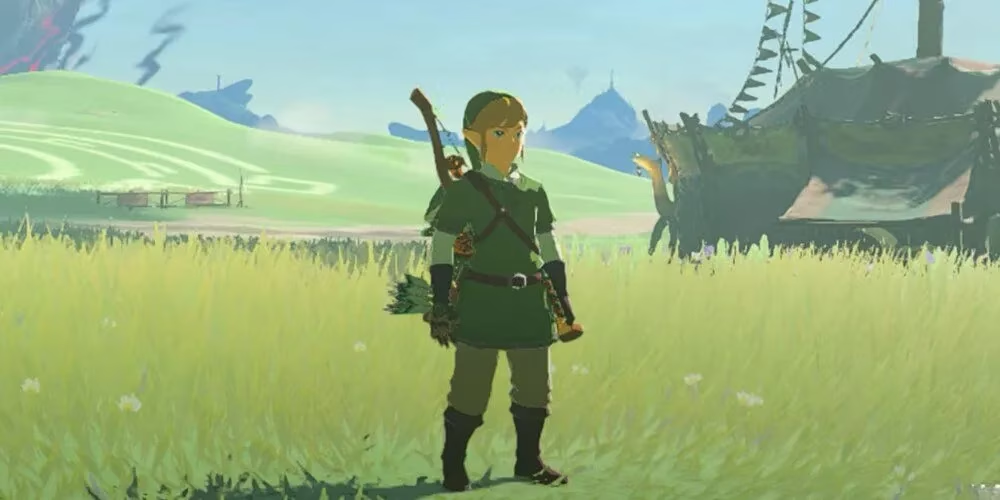
Retrieving all three parts while remaining in one piece is genuinely tricky. But it is also a fantastic love letter to Link’s appearance in the game that inspired so much of this latest title. I wore the full set, posed dramatically on a sky island, and pretended not to hear a Bokoblin laughing at me. 🪂
The White Sword of the Sky and My Dragon Claw Errands
After retrieving the outfit, I went after the White Sword of the Sky. You can get it by scanning the Link Skyward Sword Amiibo, or by completing the Mother Goddess Statue side quest. I chose the quest because I enjoy running around and hitting things with decent weapons and armor. The quest requires multiple Dragon Claws, which are then presented to the Statues of Courage, Wisdom, and Power in exchange for the Sword of the Sky. The sword is near-identical in design to the first iteration of the Goddess Sword that Link uses in Skyward Sword.
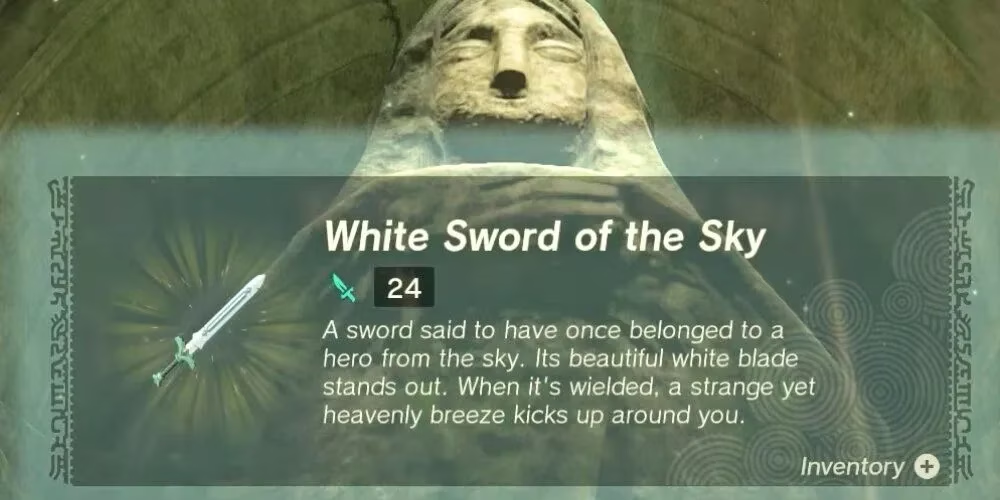
The fascinating part is where the sword appears. Link finally retrieves it inside the Forgotten Temple, which many fans have theorized is actually the Sealed Temple seen in Skyward Sword. I stood there holding a legendary blade and felt like I had walked into a timeline argument wearing muddy boots. It was glorious. 🗡️
Fi Is Still the Sword’s Weird Little Voice
In nearly every Legend of Zelda game, Link has a companion who guides him through much of his journey. In Skyward Sword, that companion is Fi, a humanoid spirit created by the goddess Hylia alongside the Goddess Sword. She resides in the sword that Link eventually uses as the Master Sword. Fi is not exactly a chatterbox in Tears of the Kingdom, but her presence is still obvious if you know where to look.
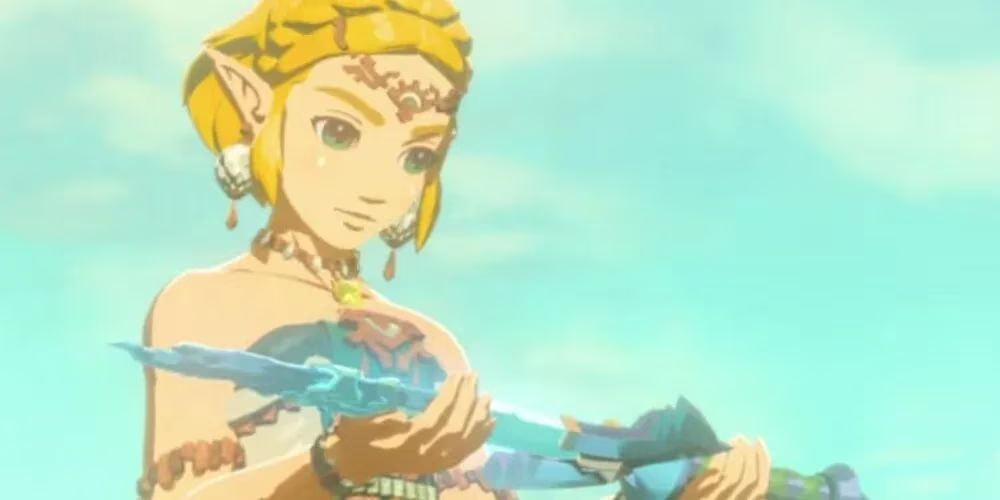
Breath of the Wild indirectly referenced Fi when Zelda spoke of a legend claiming a voice could be heard coming from the Master Sword. Completing the Trial of the Sword made the reference even more obvious, with Fi’s sound effect playing and the sword glowing. Tears of the Kingdom references her multiple times too. Zelda begins referring to the sword as ‘she’ rather than ‘it,’ and when she speaks to the sword, it glows a bright blue color, which is exactly how Fi communicated with Link in Skyward Sword. I love that Nintendo turned a sword into a character and then let her haunt the sequel like a very polite ghost. 🪄
Sky Islands: Nintendo Found a Formula and Refused to Let Go
Perhaps the biggest Skyward Sword inspiration that dedicated fans noticed in early Tears of the Kingdom trailers was the much larger emphasis on exploring the skies. Link spends the majority of Skyward Sword journeying across floating islands, with Skyloft and Pumpkin Island among the most well-known. Those islands matter to the plot, the Skyloftians, and the hidden items and side quests tucked into them.
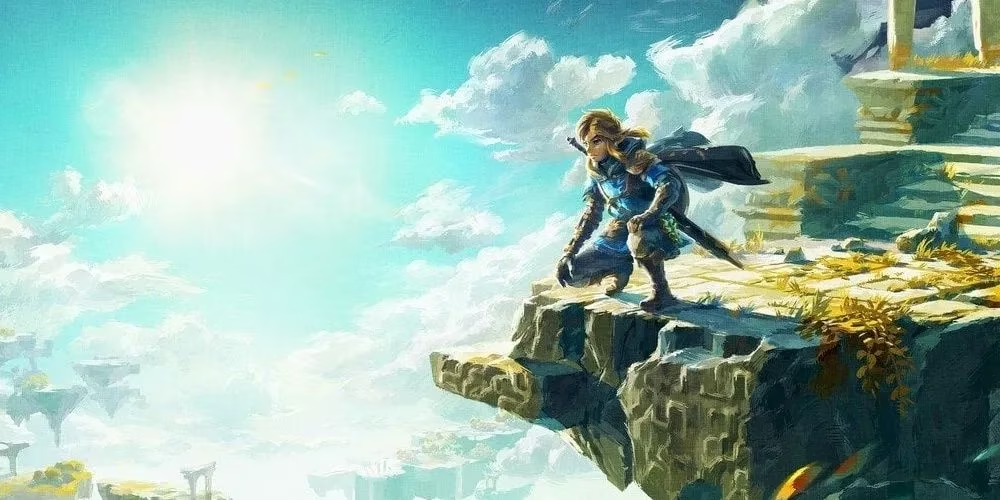
What is especially interesting is that the idea of traversing a wide-open landscape that is not on the ground was inspired by Wind Waker and Link’s open-sea navigation. Nintendo kept building on that idea, moving from Wind Waker to Skyward Sword to Tears of the Kingdom, where sky exploration is once again a huge component. I cannot decide whether this is evolution or a very ambitious elevator pitch. Either way, I keep jumping off islands and hoping for the best. 🧭
Story Echoes, Timeline Chaos, and One Very Big Groose Theory
Skyward Sword’s story is about Link and Zelda purifying the surface so the Skyloftians can finally descend and live there, eventually forming the Kingdom of Hyrule. Tears of the Kingdom is not a one-to-one remake of that plot, but the parallels are easy to spot. Rauru and Sonia were sent by the gods in Tears of the Kingdom to kick off the story, while Zelda herself was a reincarnation of the goddess Hylia in Skyward Sword and played a big role in defeating Demise, the precursor to Ganon.
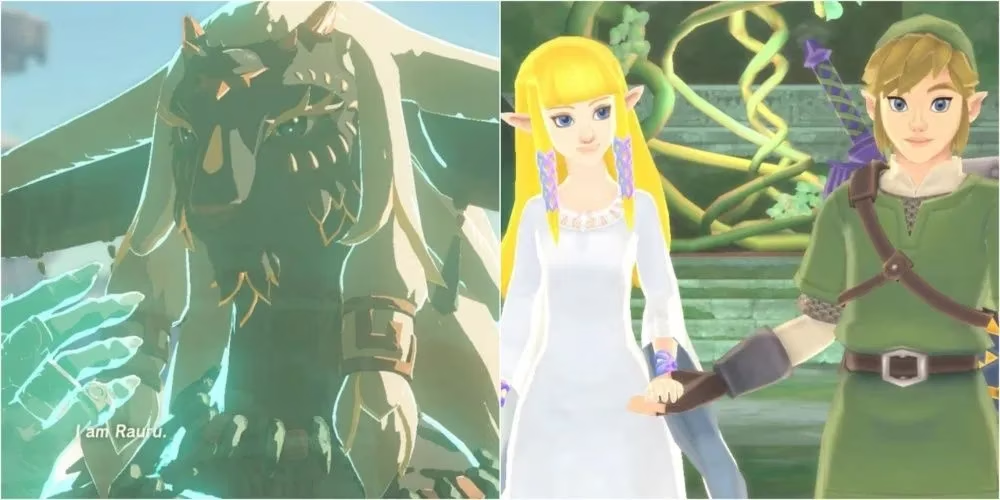
This has inevitably sparked a massive discussion among the Zelda fanbase about whether Tears of the Kingdom could be a direct sequel to Skyward Sword. Some fans go as far as to say that the Hylians seen returning to the sky at the end of Skyward Sword, such as Groose, would be the ones to evolve into the Zonai. As of 2026, Tears of the Kingdom’s place in the timeline still is not clear, but the wider plot of ridding the surface of evil with help from a divine-like being is a sentiment both games share.
So no, I am not here to declare Tears of the Kingdom a secret Skyward Sword sequel. I am here to say that the influence is everywhere: in minecarts, in outfits, in a sword with a voice, in floating islands, and in a story that keeps asking what it means to bring a broken world back together. In 2026, both games are still easy to revisit, and I recommend doing so with a snack, a map, and a healthy suspicion of any chest in the Depths. Nintendo hid a love letter under Hyrule. I found it. My dignity did not survive, but the sword glowed blue, so I consider that a win. 🎮
Insights are sourced from GamesIndustry.biz, whose reporting on long-tail engagement and Nintendo’s catalog strategy helps explain why a title like Tears of the Kingdom can resonate through older Zelda entries such as Skyward Sword, turning familiar motifs like sky traversal, legacy weapons, and rediscovered lore into meaningful design continuity rather than simple nostalgia.