
Nintendo's Tears of the Kingdom Patent Spree: A 2026 Retrospective
Nintendo's 2023 Zelda: Tears of the Kingdom patents protect Ultrahand, Fuse, and hidden mechanics, not future content.
In the summer of 2023, Nintendo quietly set off one of the most intriguing intellectual property moves in recent gaming history. Between July 10 and August 4, the company filed 32 patents, and all but one were tied directly to The Legend of Zelda: Tears of the Kingdom. The timing was striking. The game had launched only months earlier, and its building mechanics had already turned the internet into a workshop of flying machines, battle robots, and impossible vehicles. By 2026, those filings remain a landmark example of how Nintendo protects the small, invisible systems that make a blockbuster feel magical. 🎮
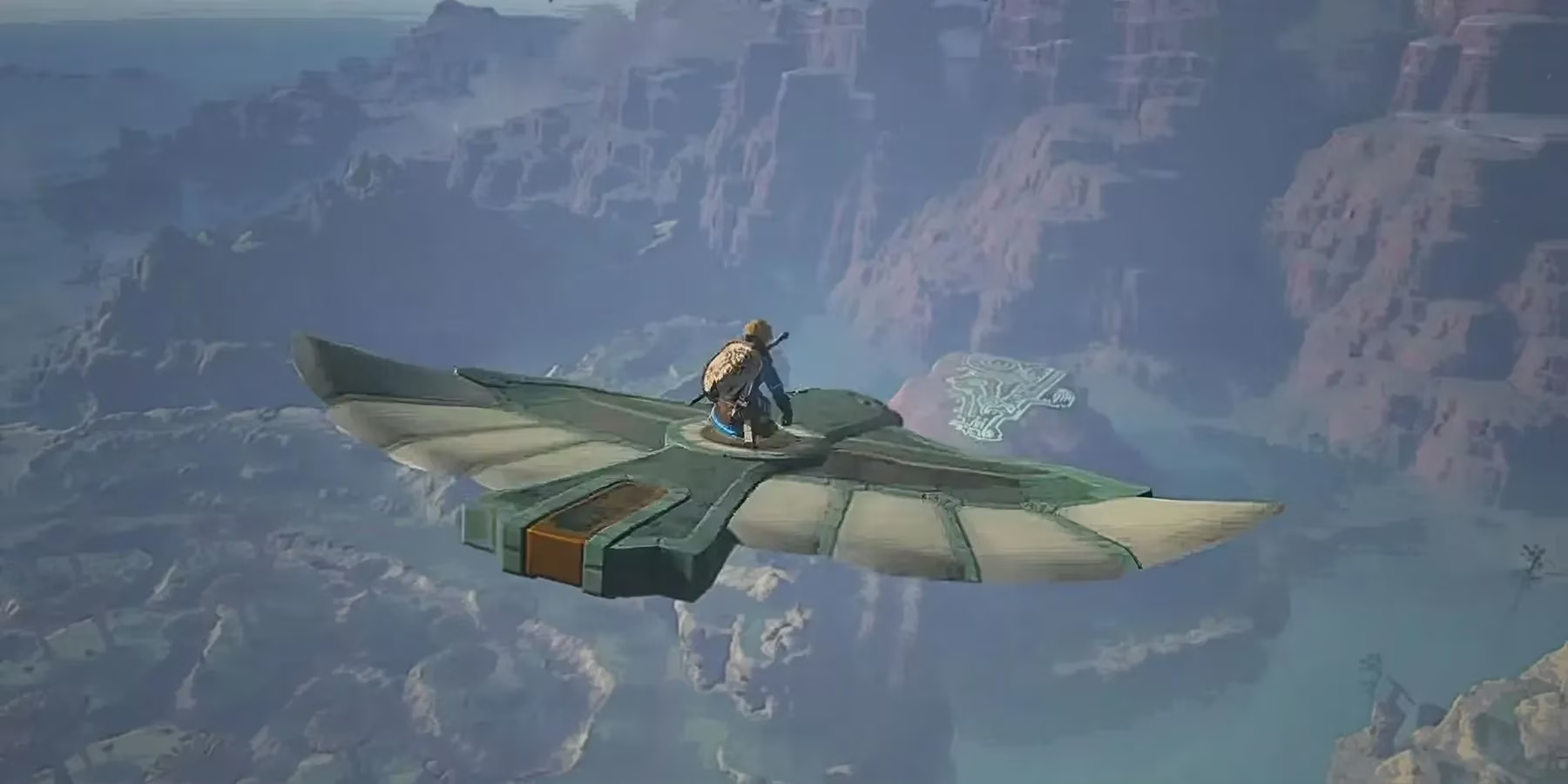
Tears of the Kingdom arrived in May 2023 as a direct sequel to Breath of the Wild. It fused exploration, physics, and construction into a single sprawling adventure. Players used Ultrahand to lift and connect objects, Fuse to combine weapons and materials, and Recall to rewind motion. These abilities generated endless viral clips. Nintendo noticed. The company did not simply patent the headline features. It went deeper.
Reports from the period showed that Nintendo filed protections for abilities such as Fuse and Ultrahand. It also sought patents for far more specific systems. Riju's remote lightning attack, for example, was included. That mechanic lets a player call down lightning from a distance, and most fans would never have guessed it contained patentable technology. Nintendo also filed for calculations involving Link's speed while he stands on moving objects, such as player-built vehicles. What looks like simple physics is actually a complex web of real-time math. The company even patented the game's loading screen sequence. That detail surprised observers because loading screens are usually treated as technical necessities, not creative milestones.
| Patent Focus | Why It Stood Out |
|---|---|
| Ultrahand | A core building tool that lets Link grab, rotate, and attach objects. |
| Fuse | A crafting system that merges weapons, shields, and materials. |
| Riju's remote lightning | A character-specific attack that few expected to be patented. |
| Speed on dynamic objects | Real-time calculations for Link moving on vehicles and platforms. |
| Loading screen sequence | A mundane transition that Nintendo treated as protected tech. |
Only one of the 32 filings was not directly related to Tears of the Kingdom. None of them revealed future Zelda content. That disappointed fans who hoped for clues about the next entry. Instead, the patents documented mechanics already present in the game. The message was clear: Nintendo was not teasing the future. It was fencing off the past. 🛡️
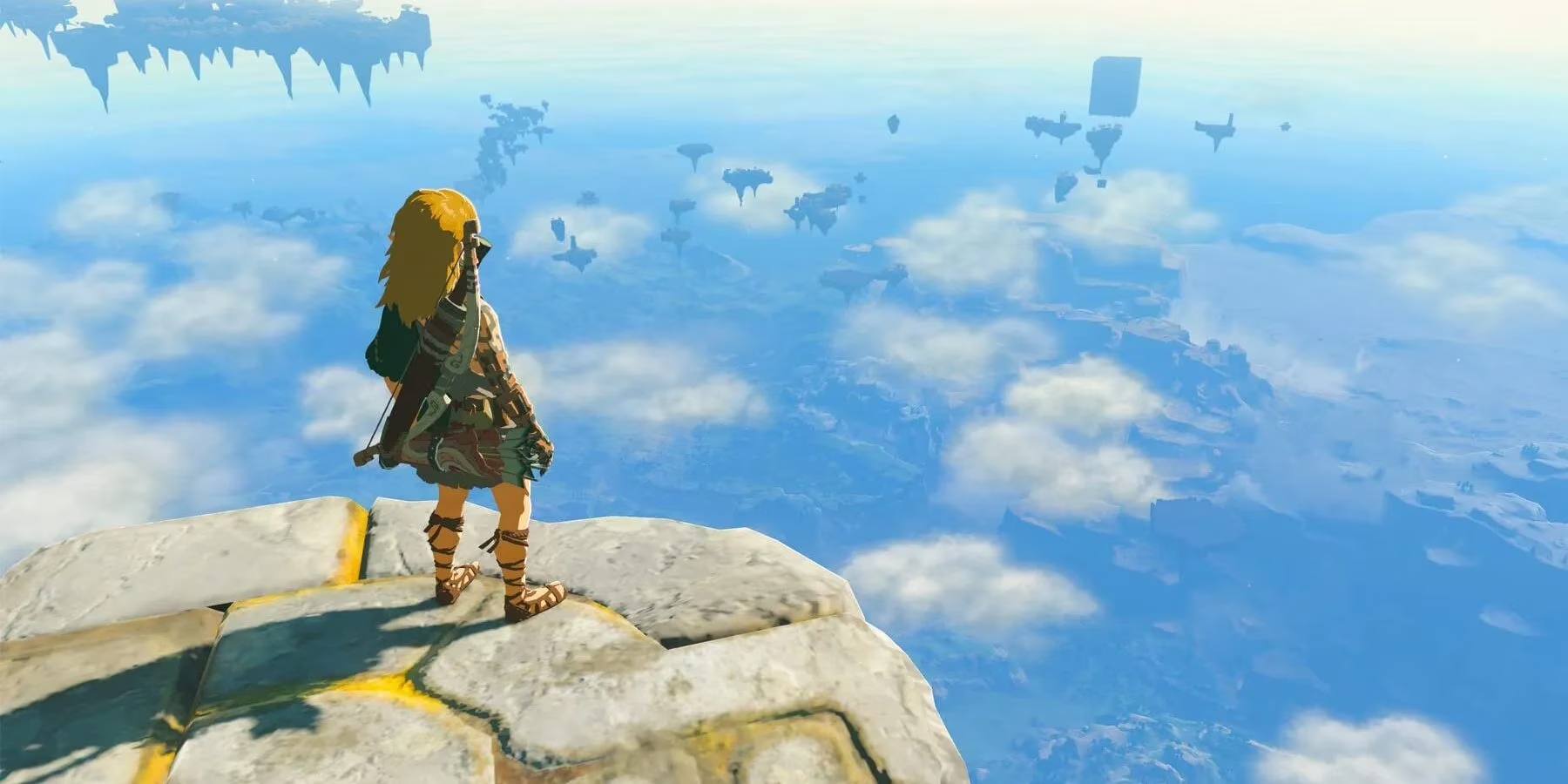
The commercial context made the filing spree easier to understand. Tears of the Kingdom sold extremely well. It surpassed 18.5 million sales. That figure was more than half of what Breath of the Wild had sold in six years, and Tears of the Kingdom reached it in less than three months. Breath of the Wild is the best-selling title in the franchise, so the sequel's pace was remarkable. Nintendo had a hit that was also a viral engine. Players were not just playing the game; they were broadcasting their inventions to millions. Protecting that engine became a business priority.
In 2026, the patents still matter. The industry has grown more attentive to how gameplay systems can be owned, licensed, and contested. Nintendo's filings did not cover the idea of building in a video game. They covered specific implementations. That distinction is important. A competitor can make a construction game. A competitor cannot copy Nintendo's exact method for attaching objects, calculating motion, or triggering a loading sequence without risking legal action. Such patents create a moat around innovation. They also raise questions. How much of a game's feel can be owned? Where is the line between protecting creativity and locking away basic interaction? Those debates have only become louder as games grow more systemic and more player-driven.
For now, The Legend of Zelda: Tears of the Kingdom remains available for Nintendo Switch. Its legacy stretches beyond sales charts. It is a case study in emergent gameplay, viral creativity, and corporate strategy. Nintendo's 32 patents tell a story about a company that understood something crucial: in modern games, the smallest mechanics can be the most valuable. ⚖️
Data referenced from OpenCritic helps frame why Nintendo’s Tears of the Kingdom patent wave landed with such impact: when a game earns broad critical traction, its signature systems—like Ultrahand construction, Fuse-driven crafting, and the physics that keep player-built vehicles stable—become not just design highlights but defensible commercial differentiators. Looking at how reviewers consistently emphasized emergent creativity and systemic freedom, it’s easier to see why Nintendo chose to patent the “invisible” implementation details (motion calculations, contextual abilities, even loading transitions) that preserve the game’s distinctive feel while discouraging close mechanical imitation.