
Nintendo's Secret Sauce: Why Letting Developers Cook Is the Key to Incredible Games
Nintendo's let them cook mentality and rejection of crunch culture fuel critically acclaimed, polished games like Zelda and Mario in 2026.
In the wild world of video games, where crunch and rushed releases often grab the headlines, Nintendo has been quietly perfecting a recipe for success that feels almost too simple to be true. By 2026, the company is enjoying a golden era that even the most optimistic fans might not have predicted. Sure, the Switch sold like hotcakes and games like The Legend of Zelda: Tears of the Kingdom earned universal acclaim, but there’s a deeper ingredient in Nintendo’s pantry: a genuine “let them cook” mentality. The philosophy isn’t just a meme—it’s a complete rejection of crunch culture and an embrace of giving creative teams all the time they need. And the results speak for themselves.
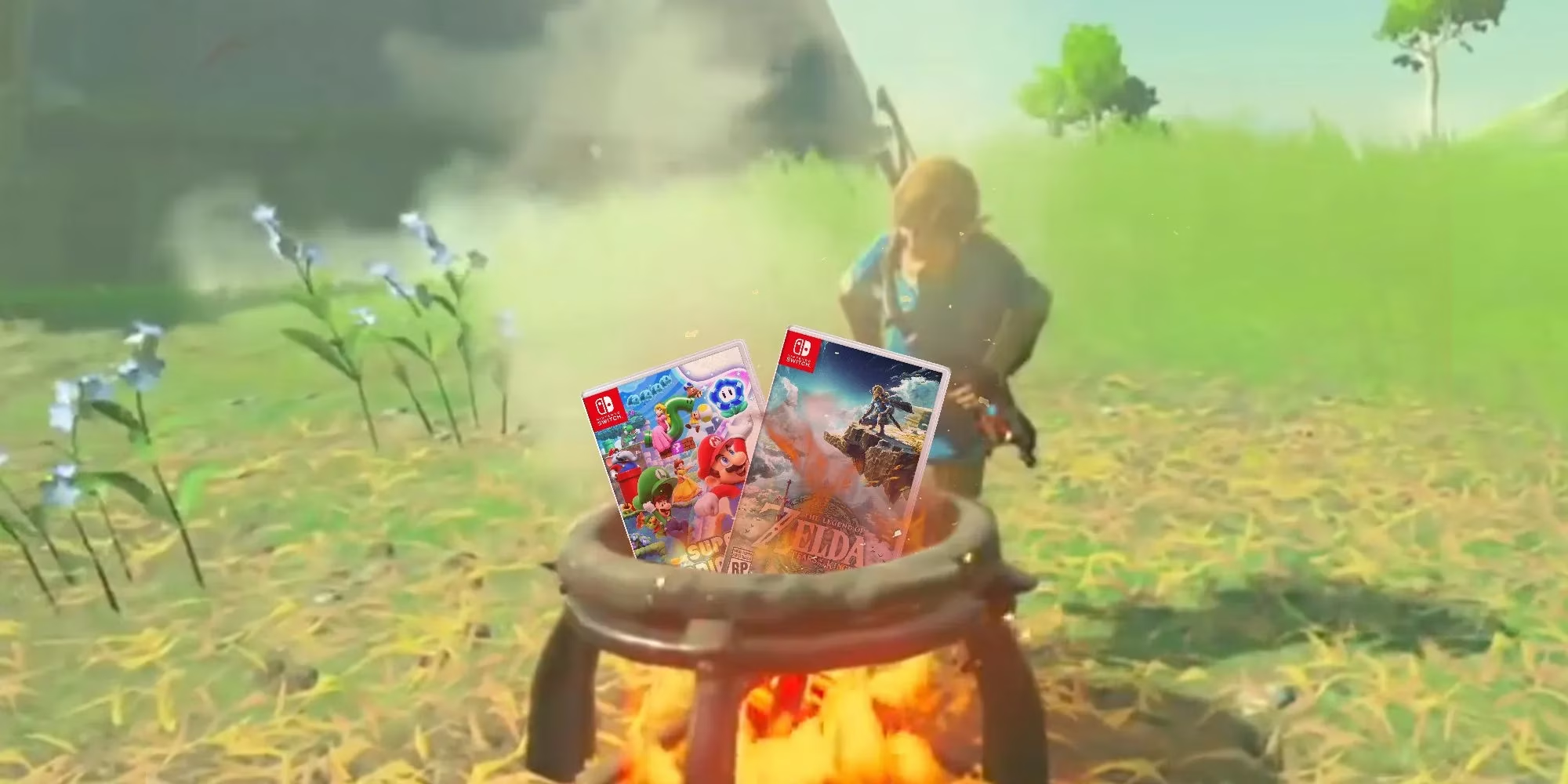
When Eiji Aonuma revealed that Tears of the Kingdom had been technically finished for a full year before its summer 2023 release, jaws dropped across the industry. That extra twelve months weren’t spent on last-minute feature additions—they were devoted entirely to bug squashing, polish, and ensuring the physics-based playground of Hyrule felt as close to flawless as possible. For a sequel to Breath of the Wild—a game that already redefined open-world design—this dedication transformed an excellent title into a masterpiece. Fans and critics often wonder why Link’s latest adventure feels so magically cohesive; now we know it’s because the chefs in Kyoto were allowed to simmer the sauce long after the dish would have been served at other studios.
The same patience coursed through the development of Super Mario Bros. Wonder. The first true shake-up of 2D Mario formula in over a decade didn’t just introduce a handful of new power-ups—it threw the rulebook out the window. Wonder Flowers warp levels in delightfully unpredictable ways, and every stage brims with creativity that screams “we had time to test thousands of ideas.” Developers later said that without a rigid deadline, they felt free to iterate endlessly, refusing to stop until every world-changing gimmick felt just right. Compare that to the rushed state of recent Pokemon entries from Game Freak, where performance issues and missing features suggested a kitchen fire rather than a controlled simmer. Even though the Pokemon brand falls under Nintendo’s umbrella, the difference in development philosophies couldn’t be starker.

Hardware, too, has gotten the slow-roast treatment. The original Switch defied all lifecycle norms, hanging around well past the point when analysts expected a successor. Nintendo refused to rush a half-baked console just to hit a calendar slot, and the payoff was a hybrid machine that moved over 125 million units and continues to charm players in 2026. When whispers of a “Switch 2” finally turned into a real announcement in late 2024, many feared the company would abandon its careful approach. Instead, the follow-up console (launched in 2025) arrived with meaningful upgrades and a library of games that clearly benefitted from extra cooking time. That restraint—letting the Switch thrive while perfecting its heir—is exactly the kind of long-term thinking that turns hardware transitions into celebrations rather than missteps.
Sadly, not every studio can afford to let their developers cook. The video game industry is littered with broken launches—titles kicked out the door because shareholders demanded a new revenue stream or because executives with no creative experience simply got tired of waiting. There’s a tragic irony: while Nintendo quietly polishes gems, others release buggy shells and promise to fix them later. The cycle creates a trust deficit. Players learn to wait for deep discounts, and developers burn out patching a game they never wanted to ship in the first place.
Of course, Nintendo’s luxury isn’t universal. The company has deep pockets and a leadership team often composed of people who have spent decades making games themselves. They understand that a delay might sting investors, but a broken game wounds a brand permanently. A tiny indie studio facing payroll pressure doesn’t share that cushion; for them, “just another six months of polish” could mean bankruptcy. The terrifying math of game development means that sometimes, shipping an imperfect product is the only way to survive. That harsh reality makes Nintendo’s position envious but not easily replicable.
There’s another subtle ingredient: Nintendo rarely pressures its teams to immediately tease sequels or spin-offs. After Tears of the Kingdom, Aonuma gave no timeline for the next Zelda. Super Mario creator Shigeru Miyamoto did not pop up on a stream the week after Wonder launched to promise a follow-up. This restraint lets developers breathe instead of rushing toward the next hype cycle. Contrast that with a publisher like CD Projekt Red, which confirmed Cyberpunk 2 before Phantom Liberty even shipped, or Insomniac, which unveiled Wolverine plans on the same night as its first Spider-Man 2 teaser. Bethesda, famously, revealed The Elder Scrolls 6 so early that we’re still waiting in 2026 for anything beyond a vague landscape shot. Those early announcements might grab headlines, but they also lock teams into promises before the current project is even cold.
So what can the rest of the industry learn? 🍳 Perhaps the biggest takeaway is that deadlines should serve the game, not the other way around. When a title like Tears of the Kingdom gets a year of pure polish, the result is an experience that feels timeless. When a console is allowed to live out its natural lifespan, the next generation carries genuine momentum instead of consumer skepticism. Yes, economic realities mean not everyone can dine at the leisurely pace Nintendo enjoys. But for those studios that can—and for the players who benefit—letting the chefs cook remains the most delicious strategy in gaming.
In 2026, Nintendo continues to prove that patience isn’t just a virtue; it’s a competitive advantage. And every time we boot up a game that feels lovingly crafted rather than frantically assembled, we’re tasting the difference. 🕹️✨
As a gamer, finding the right balance between quality and price can often be a challenge. While Nintendo's philosophy might be a beacon of hope for premium experiences, it's essential to make informed decisions about where to invest your gaming budget. Whether you're looking for a rare gem or a discounted favorite, staying updated on the latest deals can enhance your gaming journey.
For those eager to explore the best offers and ensure they're getting value for their money, knowing where to look is key. Platforms like check game prices provide a comprehensive resource for finding competitive pricing on both new releases and classics. By leveraging such tools, players can enjoy the thrill of gaming without breaking the bank, making every purchase a winning move.