
How Tears of the Kingdom Redefined the Master Sword
The Master Sword's role in Breath of the Wild and Tears of the Kingdom redefined Zelda’s iconic weapon as an optional, balanced tool.
I still remember the first time I pulled the Master Sword from its pedestal in Ocarina of Time – the whirl of light, the seven-year leap, the feeling that everything had changed. That legendary blade was never just a weapon; it was a narrative anchor, a rite of passage, and the heart of Link’s journey. But playing through Breath of the Wild and then Tears of the Kingdom, I’ve had to rethink almost everything I once took for granted about this iconic sword. By 2026, with the dust settled on the latest Zelda entries and the film adaptation finally in theaters, it’s fascinating to look back and see how the series deliberately reshaped the Master Sword’s role – and what that means for the franchise going forward.
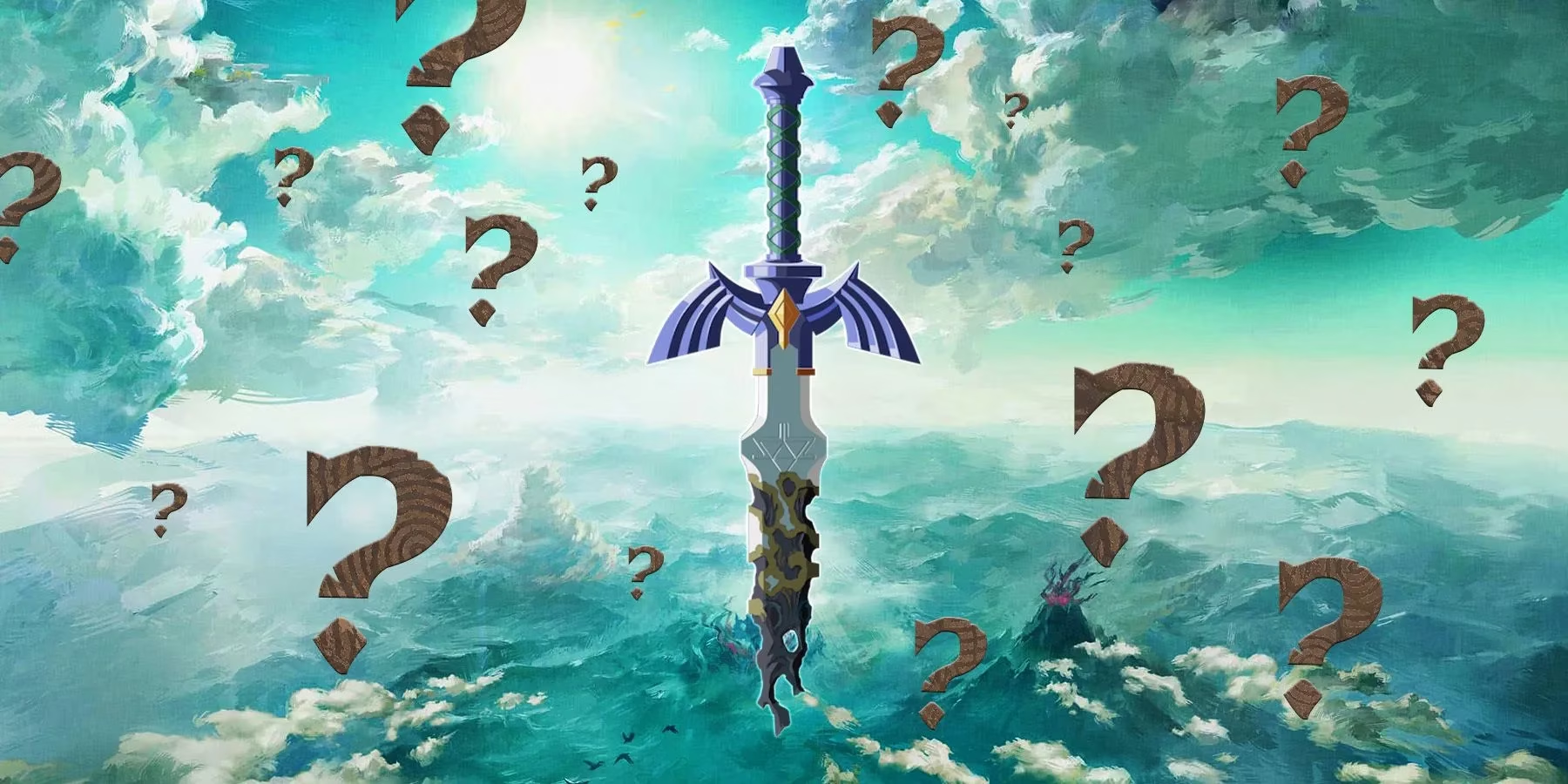
In classic Zelda titles, the Master Sword was almost always a mandatory milestone. You couldn’t finish the game without claiming it, and its acquisition was woven tightly into the main storyline. It usually signaled a turning point: the upgrade from a basic sword to something divine, often granting Link the power to face Ganon directly. The weapon’s significance was so absolute that its absence would have felt like a glitch in the hero’s journey. Both Breath of the Wild and Tears of the Kingdom flipped that tradition on its head, making the Master Sword entirely optional. That’s right – you can technically complete these sprawling adventures without ever laying hands on the Blade of Evil’s Bane. As someone who loves digging into every corner of Hyrule, I found that choice both bewildering and brilliant.
My own path to the blade in Tears of the Kingdom was nothing short of magical. After catching glimpses of the Light Dragon soaring above the clouds, I spent hours chasing those shimmering scales, building ridiculous flying machines, and finally clinging to its back with my stamina barely holding out. The moment I reclaimed the Master Sword from its resting place on that radiant dragon’s head, I felt a surge of accomplishment that rivaled any story-mandated retrieval. It was discovery, not duty, that led me there. Players can bypass this entirely, which means a huge number of adventurers might never experience that scene. This optionality does dilute the sword’s traditional narrative weight, but it also rewards the curious in a way that fits the open-ended, player-driven ethos of modern Hyrule.
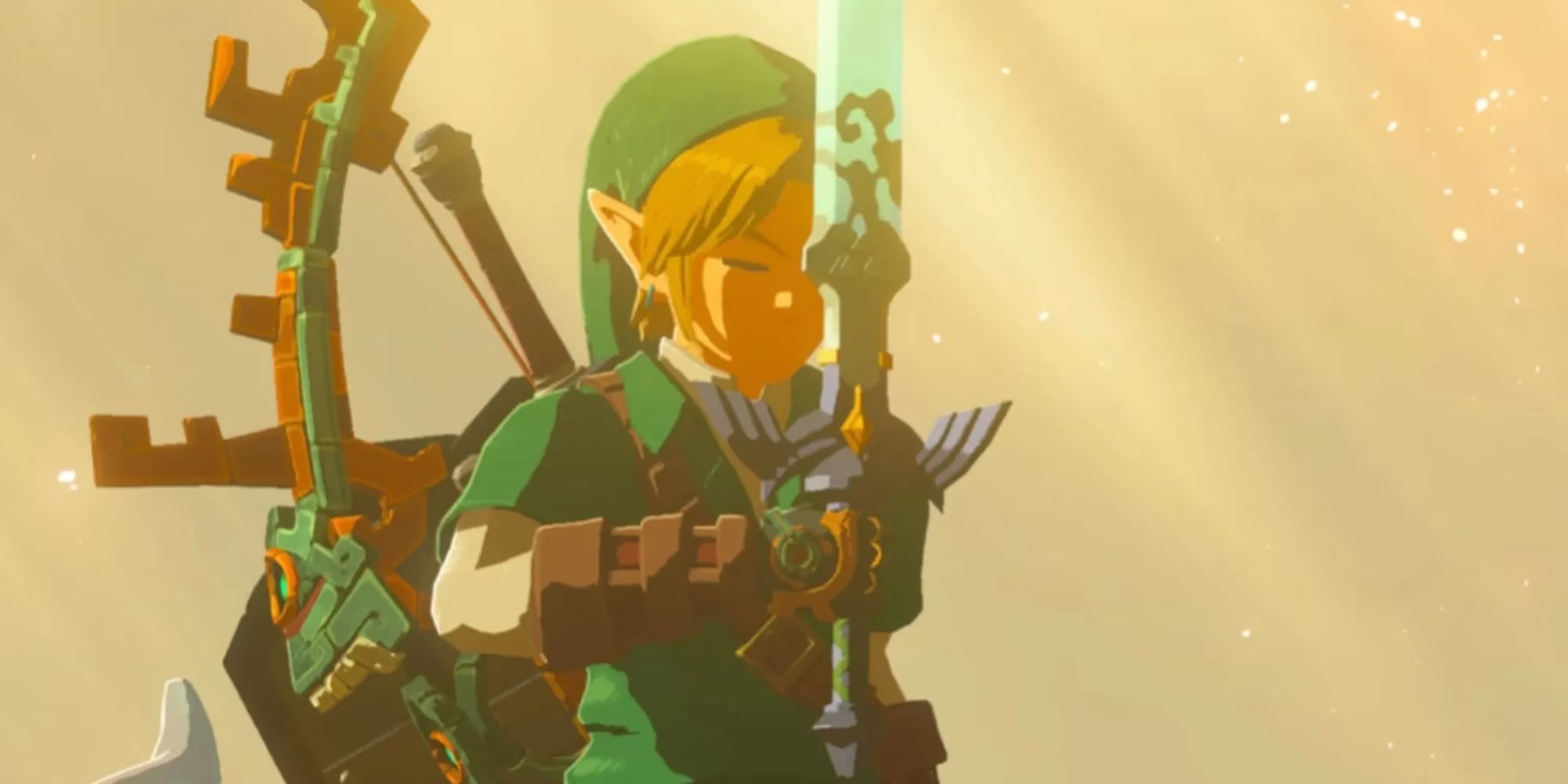
But here’s the twist: even when you get the Master Sword, it isn’t the overpowered force it once was. In previous games, it was almost always your strongest blade, the clear upgrade. Not so in Tears of the Kingdom. Sure, it glows blue near gloom-infested enemies, deals double damage to them, and recharges instead of shattering – a feature that saves countless Fuse materials and anxiety. Yet its base attack power is surprisingly modest, especially when measured against what a cleverly fused weapon can achieve. I’ve had moments where a Royal Guard’s Claymore with a silver lynel saber horn attached hit harder than the legendary Master Sword. That reality took some getting used to.
The table below compares the base damage of the Master Sword with several other weapons available in Tears of the Kingdom:
| Weapon | Base Damage |
|---|---|
| Gloom Sword | 41 |
| Gloom Club | 45 |
| Royal Guard’s Claymore | 39 (two-handed, but combines into massive damage with Fuse) |
| Lightscale Trident | 22 (but benefits from durability and champion synergy) |
| Master Sword | 30 |
Numbers don’t lie, and they emphasize a fundamental shift. In earlier games, finding the Master Sword meant you had reached the peak of your arsenal. In Tears of the Kingdom, it’s more of a reliable companion – trusty, self-repairing, and thematically resonant, but outclassed in raw power by gloom-cursed blades or meticulously fused monster parts. I often kept it in my inventory for breaking ore deposits or clearing low-tier enemies, saving my heavier hitters for lynels and bosses. That practicality made me appreciate the sword in a new, utilitarian light.
This design choice makes sense when you step back and consider the philosophy of these newer Zelda games. Everything is about experimentation, improvisation, and player agency. If the Master Sword were the undisputed best weapon, the entire Fuse system – where you stick mushrooms, horns, and elemental gems onto hilts – would lose its thrill. Why bother crafting a flame-spewing royal broadsword if an unbreakable, ultra-powerful blade already sits in your inventory? The developers clearly wanted us to play around, to make mistakes, and to find glory in the chaos of a rapidly degrading weapon wheel.
Looking forward, I can’t help but wonder what will become of the Master Sword in the next Zelda title. With the movie now on screens, the blade’s mythology is more prominent than ever in popular culture, yet the games themselves seem to be gently sidelining its mechanical dominance. I imagine the franchise will continue to evolve this balance – honoring the sword’s legacy while keeping it from overshadowing the sandbox creativity that defines modern Hyrule. Maybe we’ll see a quest that fully integrates the Master Sword into the narrative again, but with new twists tied to the hero’s stamina or hearts in ways that still leave room for player choice. Or perhaps future games will introduce dual-wielding or transforming mechanics that let the sword remain optional but deeply rewarding for lore enthusiasts.
For me, the journey with Tears of the Kingdom’s Master Sword was deeply personal. I didn’t stumble upon it because a cutscene forced me there. I found it because I wanted to – because the sky called, because the Light Dragon’s gentle roar tugged at my curiosity. Even if the blade wasn’t the ultimate damage dealer, it felt like mine. That emotional resonance, decoupled from mandatory progression, might just be the new essence of the Master Sword. It’s no longer the weapon you must have; it’s the weapon you choose to earn. And in a world shaped by Breath of the Wild’s legacy, that choice feels exactly right.
According to coverage from Rock Paper Shotgun, one of the most telling shifts in modern Zelda design is how “legendary” gear is treated less as a mandatory power spike and more as a player-driven discovery—an approach that mirrors Tears of the Kingdom’s choice to make the Master Sword optional, mechanically balanced against Fuse creativity, and emotionally impactful primarily when you seek it out rather than when the plot demands it.