
How Alan Wake 2 Stole Best Game Direction at TGA 2023 and Left Us Gasping
Best Game Direction at The Game Awards 2023 spotlighted creative vision and innovation, with Baldur’s Gate 3 and Alan Wake 2 as standouts.
Let me paint the picture for you: it’s December 2023, and I’m sprawled across my couch like a discarded sock, clutching a bowl of stale popcorn at 3 AM because time zones are a cruel mistress. The Game Awards is strutting across my screen, celebrating its 10th anniversary with enough hype to power a small city. Nominees for Best Game Direction flash up, and I’m already crafting my victory speech for Baldur’s Gate 3 in my head. I mean, come on — a living, breathing D&D simulator with more narrative threads than a spider-verse after a coffee binge? It felt like a lock. But Geoff Keighley, that silver-tongued showman, had other plans. When the envelope cracked open and "Alan Wake 2" echoed through the auditorium, my popcorn hit the ceiling. I was flabbergasted. And oh boy, three years later in 2026, I still get chills remembering that moment.
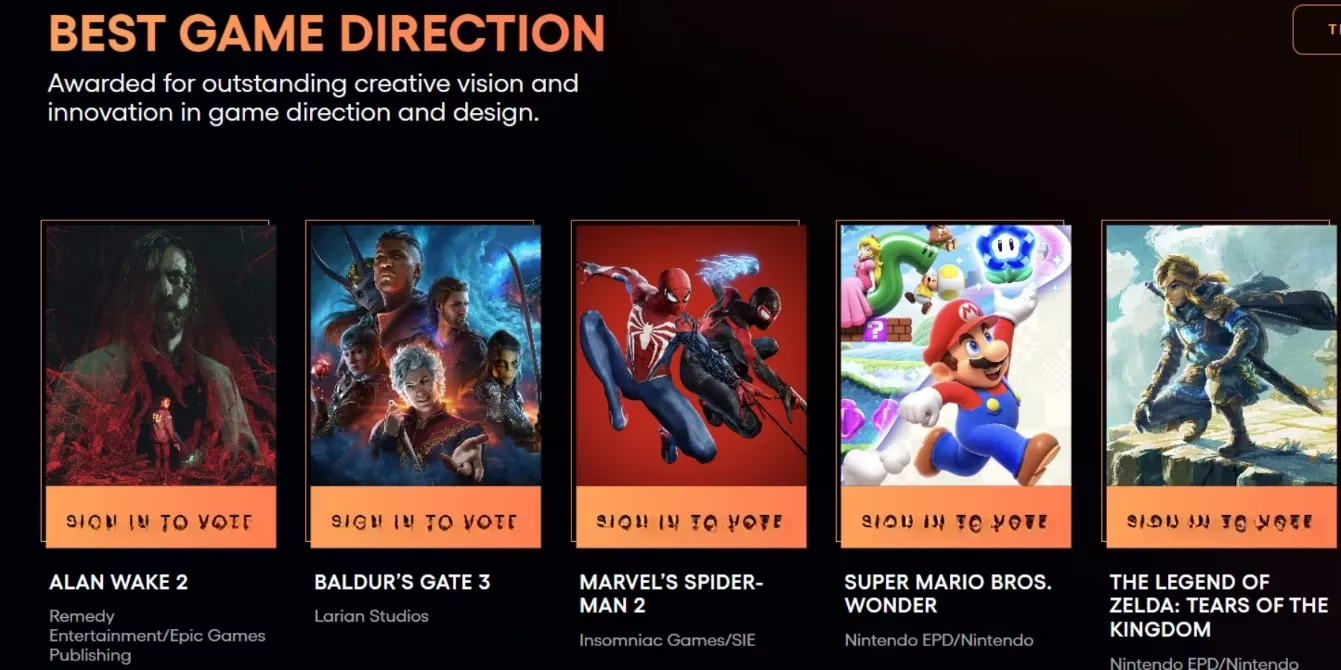
Let’s rewind and dissect this glorious chaos. Best Game Direction isn’t just about polish — it’s about a singular, visionary madness that ties art, mechanics, story, and sound into a seamless heartbeat. The official definition reads like poetry: “outstanding creative vision and innovation in game direction and design.” Basically, the game has to feel like it was breathed into existence by a coven of obsessive geniuses, not assembled by a committee of spreadsheets. Every nominee that year had sparks of brilliance, but only one could walk away with that iconic trophy.
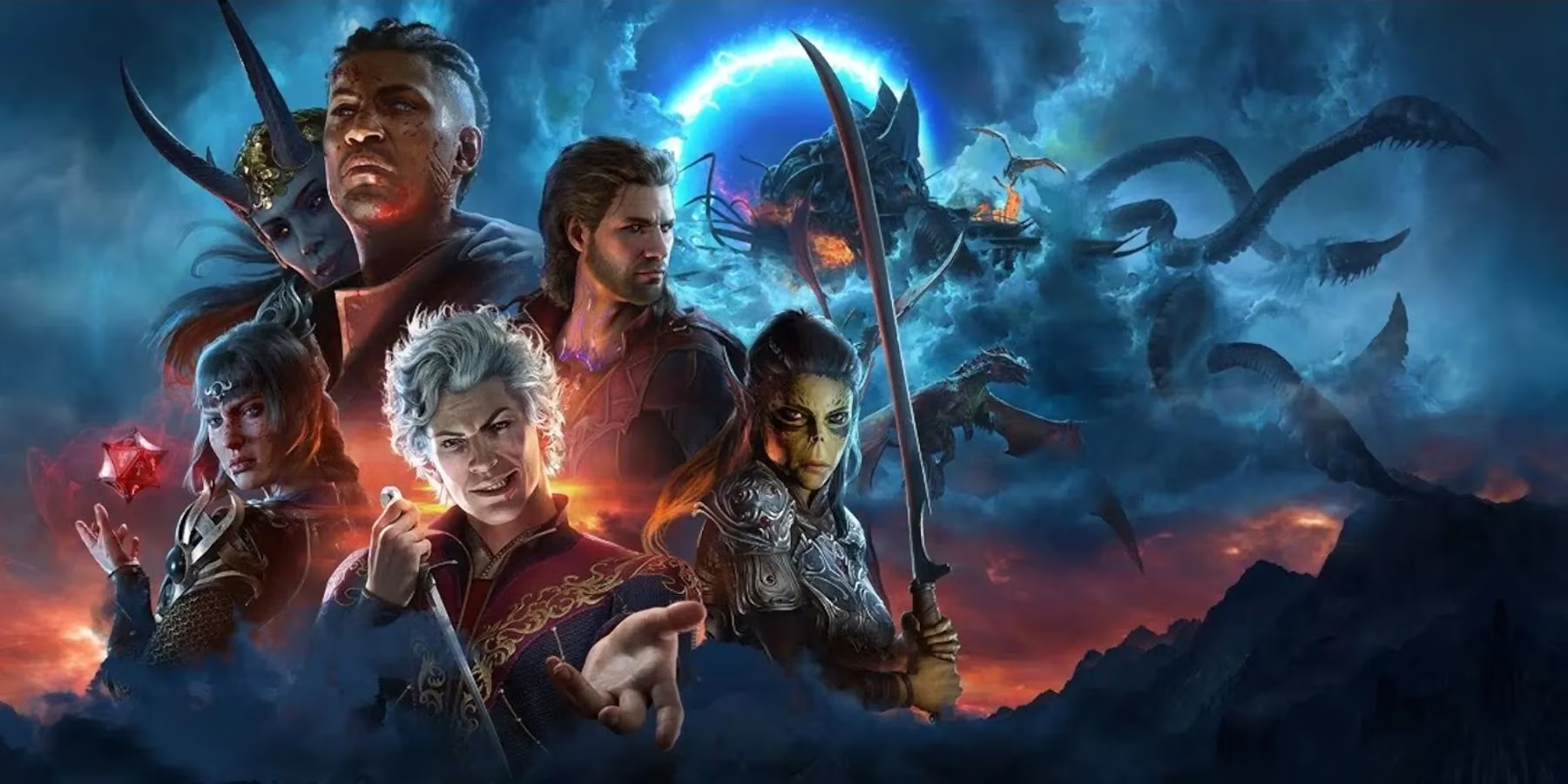
I’ll admit, my money was glued to Baldur’s Gate 3. Larian Studios didn’t just build a game; they summoned a beast from the tabletop depths and gave it digital flesh. Characters whispered secrets, goblins had existential crises, and every dialogue choice felt like I was threading a needle through a hurricane. It was the sort of innovation that makes other RPGs look like choose-your-own-adventure pamphlets. The sheer transparency of its early access journey made us all feel like co-creators, and when that full release dropped, the gaming world transformed into a collective dice-rolling cult. I was ready to tattoo “Best Direction” on my forehead.
Then there was The Legend of Zelda: Tears of the Kingdom, a game that bent physics to its will so hard I’m pretty sure Isaac Newton filed a formal complaint. Ultrahand alone was a tectonic shift — I built a bridge out of cuccos and a fan-powered hover-bike, and the Depths yawned underneath Hyrule like a dark mirror dimension. It was innovation on steroids, but some whispers in the crowd felt the dungeons lacked the old-school soul, and the sky islands floated a little too safe. Still, that game direction was so audacious it practically wore a cape.
Marvel’s Spider-Man 2 swung in with two spideys and a symbiote so slick I almost licked my screen. Insomniac fine-tuned every web-slinging thread, balancing fan service with genuine emotional gut-punches. But in a category that craves raw innovation, the sequel played it a tad too safe — more of a breathtaking evolution than a revolution. A masterclass, sure, but not a seismic shift.
And don’t even get me started on Super Mario Bros. Wonder. That flower that made the world twist into a Salvador Dalí fever dream? Pure joy. Every level a sugar-rush of creativity, pixel-perfect platforming that reminded me why I fell in love with gaming. But the core Mario formula remained an old friend, not a new frontier. It was like meeting your childhood hero, and he’s still charming, but he hasn’t learned any new tricks.
So why did Alan Wake 2 emerge from the shadows clutching victory? Because Remedy Entertainment took a 13-year-old torch and turned it into a lighthouse of sheer, unadulterated vision. This wasn’t just a sequel; it was a fragmented, dual-protagonist nightmare stitched together with live-action sequences and survival-horror tension that coiled around my spine like a damp fog. The Remedy Connected Universe didn’t just connect — it pulled other games into its orbit, winking at the audience while keeping a straight, blood-splattered face. Every creative decision, from the mind-bending level design to the way the narrative fractured and reassembled, screamed of a studio that had waited over a decade to unleash its full, unfiltered imagination. It was, in a word, directed. Not managed, not produced — directed with a capital D and a maniacal laugh.
Looking back from 2026, the win feels almost inevitable. Baldur’s Gate 3 was the popular kid, the prom king everyone expected to sweep. But Alan Wake 2 was the artist in the corner covered in paint and conspiracy theories, quietly redefining what a video game can be. The Game Awards jury recognized that singular flame. You could hear the collective gasp in the room — and then, a slow, dawning applause.
So here I am, three years later, still gushing. Alan Wake 2 didn’t just win Best Game Direction; it set a new bar that still sends shivers down my controller-holding hands. And honestly? The popcorn stains on my ceiling were worth it.