
From Ocarina to Tears: Ranking Every Version of Epona in The Legend of Zelda
Our tier list ranks every Epona version in The Legend of Zelda, from Ocarina of Time's emotional debut to Twilight Princess's combat partner.
Across the sprawling timelines and reimagined Hyrule landscapes, one companion has remained a constant heartbeat for Link—the loyal steed Epona. While each Legend of Zelda title reinvents its world, the presence of this brown-coated mare with a flowing white mane carries a thread of familiarity that fans cling to. She’s more than a mount; she’s a symbol of trust, speed, and the unspoken bond between hero and horse.
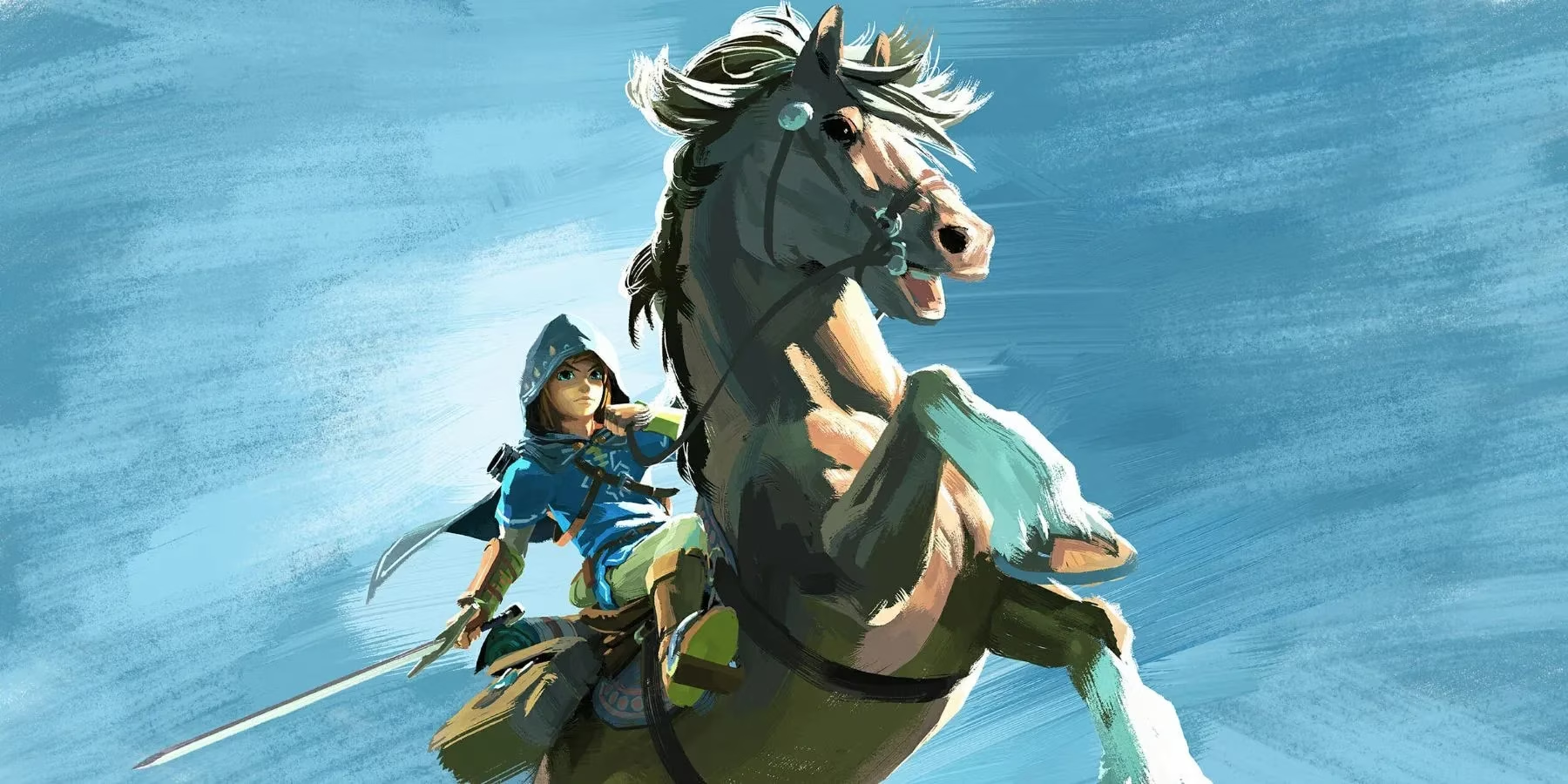
Not every Epona is created equal, though. Some versions gallop straight into the player’s heart, while others… well, they try their best. Let’s take a ride through the best—and the not-so-best—iterations of this iconic equine.
Ocarina of Time — This is where the magic began, and honestly, no other Epona has quite matched the emotional punch of her debut. She first prances onto the screen right in the opening title sequence, Link already atop her back, hinting at adventures to come. The actual quest to obtain her is entirely optional, tucked away in the cheerful chaos of Lon Lon Ranch, but that’s almost part of the charm. Young Link learns Epona’s Song from the whimsical Malon, and after a bit of patient bonding, the horse races across Hyrule Field with a newfound sense of freedom. Then, time skips forward. Reuniting with Epona as an adult—seeing her stronger, still loyal—feels like a homecoming. She’s not just transportation; she’s a piece of Link’s lost childhood that miraculously survived. Let’s be real: most players never even noticed the Longshot could bypass the broken bridge. They were too busy making sure Epona got her daily carrot.
Twilight Princess — If Ocarina of Time cemented Epona’s place in our memories, Twilight Princess gave her a chance to be a genuine hero. Here, she starts as part of Link’s quiet ranch life, a link to his childhood friend Ilia and a simpler world before shadow beasts twist everything. When they’re separated, the ache is palpable. By the time Link whistles for her in the vast fields again, the reunion carries real weight. For the first time—and so far, the only time—Epona becomes a full-blown combat partner. She charges through horseback skirmishes, carries the wounded prince Ralis, and even stands alongside Link in the final thunderous clash against Ganondorf. And hey, anyone who guided her through those burning carriage escort missions knows she’s got nerves of steel. This Epona doesn’t just follow; she fights, and she proves that a loyal heart can tip the scales of destiny.
Majora’s Mask — Canonically speaking, this is the very same Epona from Ocarina of Time’s child era, making her the only version to saddle up for two canon adventures. That alone should count for something. As the game opens, she’s right there with Link, only to be snatched away by the mischievous Skull Kid in a moment that feels like a punch to the gut. Shortly after, she’s found—briefly—before the world twists into Termina’s melancholy. She’s necessary for crossing certain areas, and discovering her connection to the Romani Ranch side quest adds a bittersweet layer. But despite her continued presence, something is different. She doesn’t stir the same deep bond this time around. Maybe it’s the constant time-loop pressure, or maybe she’s just… quieter. She becomes less a character and more a key, nudging the player toward progress rather than standing as a companion. Still, seeing her whinny in the rain-slicked fields carries a nostalgic warmth that’s hard to ignore.
Hyrule Warriors — Okay, so this is where things get delightfully chaotic. In the non-canon musou spin-off, Epona trades galloping through green fields for outright battlefield domination. Link can wield an entire weapon style centered on horseback combat, with each tier of weapon reskinning the horse to match her appearances from different games. It’s pure fanservice, and honestly, it works. Zipping across the map, mowing down hordes of Bokoblins with a spinning strike while Epona’s hooves kick up dust feels absurdly satisfying. She moves like a four-legged hurricane. But let’s not kid ourselves—combat is not what Epona is known for. She’s meant for quiet rides across Hyrule Field at sunset, not for turning into a living wrecking ball. This version is a riot to play, but it lacks the soul that makes the character special. It’s like putting a beloved childhood friend in a wrestling ring—fun to watch, but not quite right.
Breath of the Wild / Tears of the Kingdom — By 2026, the era of the Wild-era Hyrule has settled into legend, and yet Epona’s role here remains a point of frustration. In both open-world masterpieces, regular horses fill the landscape, but they’re often overshadowed by the sheer utility of the Paraglider and, in Tears of the Kingdom, those endlessly inventive Zonai contraptions. To summon the legendary Epona herself, you need either a specific amiibo or a save file transfer from Breath of the Wild. That’s a lot of hoops to jump through for a horse who should, by all rights, be the star of the stable. Yeah, she’s statistically the best all-around mount—balanced speed, perfect temperament, never bucking you off—but the gatekeeping stings. After unlocking her, she’s a joy to ride, tearing across the grassy plains with that same unmistakable grace. Still, she feels more like a bonus unlockable than the integral partner she once was, and that’s a shame.
The Minish Cap — Let’s not end on a sour note; instead, let’s appreciate the tiniest cameo. Top-down Zelda games rarely need horses, so Epona’s appearance in The Minish Cap is more of a charming Easter egg than a gameplay feature. She can be found near Hyrule Town alongside Malon, and together they run a Lon Lon Milk stall. If Link shrinks himself with the Minish Cap, he can actually talk to Epona, who cheerfully pitches the milk with her own little sales pitch. It’s adorable, but it’s also the least impactful version of the character. Without the freedom of a gallop, Epona is just a sweet memory of bigger adventures—a reminder that some legends are better experienced from the saddle.
Epona has worn many saddles across the decades, from the fields of Hyrule to the heat of battle. Whatever form she takes, the echo of her hoofbeats reminds us why she endures: she’s not just a tool. She’s the quiet heart that beats beneath every journey, waiting for a whistle and a carrot.